Though Henry VIII may be one of the most recognisable figures in the history of English monarchs, his father Henry VII was also a crucial part of shaping English history.
Henry VII, born Henry Tudor, emerged as a pivotal figure in England, shaping the course of the nation during (and after) the tumultuous period following the Wars of the Roses. His ascent to power marked the beginning of the Tudor dynasty, a transformative era which saw political stability, economic growth, and cultural renewal. This revision guide examines Henry VII's consolidation of power, governance, foreign relations, society, economic development, and cultural achievements during his reign.
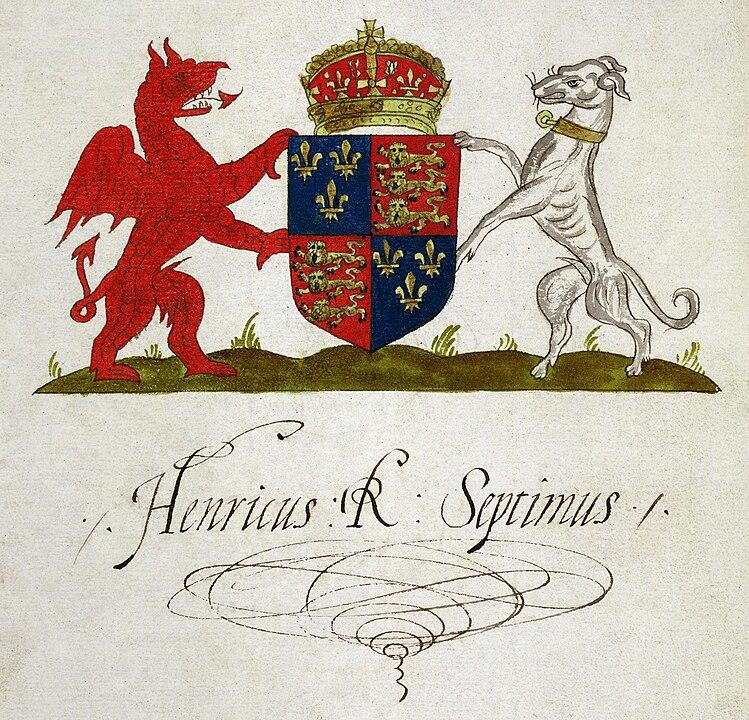





Consolidation of Power and Establishment of the Tudor Dynasty
Henry Tudor's rise to power has been seen by many scholars as a blend of ambition, cunning, and strategic alliances. Born on January 28, 1457, Henry's claim to the throne was rooted in his Lancastrian ancestry, tracing back to his mother, Margaret Beaufort. His aim was not only to secure his own rule but also to unite the warring factions of Lancaster and York, thereby bringing an end to the Wars of the Roses.
The Wars of the Roses had rumbled on for over 30 years until, in 1485, Henry achieved this goal by defeating Richard III at the Battle of Bosworth Field and claimed the crown for himself. His marriage to Elizabeth of York, daughter of Edward IV, solidified his claim and established the Tudor dynasty, ushering in a new era of English history. He had promised the Yorkists who did not support Richard III that if he were to be crowned king, he would marry Elizabeth of York. At the end of the Wars of the Roses and a time of great conflict, this was a way to unify the people of England.
Government
Henry VII's government generally took a pragmatic approach to governance, aimed at centralising authority and restoring stability to the kingdom. He relied heavily on trusted advisors, such as Sir Reginald Bray and Sir Richard Empson, to manage affairs of the state and enforce royal decrees.
The Privy Council, composed of nobles and officials appointed by the king, served as the chief instrument of governance, advising on matters of policy, justice, and finance. Henry's domestic policies focused on strengthening royal finances, enforcing law and order, and curbing the power of the nobility through measures such as the Court of Star Chamber.
Relationships with Scotland and Other Foreign Powers
Henry VII pursued a cautious foreign policy aimed at safeguarding his dynasty and preserving peace with England's neighbours. The Scottish attitude towards the English was usually hostile, and this presented a significant challenge, but one that Henry VII did overcome to a degree.
He negotiated marriage alliances and diplomatic treaties to strengthen ties with Scotland, France, Spain, and the Holy Roman Empire. The marriage of his daughter Margaret Tudor to James IV of Scotland sought to forge a lasting peace between England and Scotland, while alliances with European powers aimed to balance power dynamics on the continent and protect England's interests abroad.
Henry's diplomatic efforts were largely successful, securing his dynasty and maintaining stability throughout his reign. Though it is a generalisation, the foreign policy was designed to keep England at the centre of most European affairs but not commit to wars that cost resources and caused deaths.
Society Under Henry VII
Tudor society was marked by hierarchical divisions between churchmen, nobles, and commoners, each with their own roles and responsibilities.
The clergy wielded significant influence through their control of land, wealth, and ecclesiastical offices, while the nobility retained their traditional roles as landowners, warriors, and courtiers.
Commoners, comprising peasants, artisans, and merchants, faced economic hardships and social inequalities, exacerbated by enclosures, taxation, and inflation. Social discontent simmered beneath the surface, leading to sporadic rebellions such as the Cornish Rebellion (1497) and the Yorkshire Rebellion (1489), which were swiftly suppressed by Henry's forces. Plenty of people faced extreme hardship in the UK at this time, and wealth distribution was far from equal, which led to some uprisings, but none that Henry’s army and relationships could not quickly quash.
Economic Development
Though other areas of Tudor rule under Henry VII are less clean-cut, this was undeniably a period of economic boom.
Under Henry VII, England experienced a period of economic growth and prosperity, driven by trade, exploration, and the expansion of industry. The growth of commerce and trade routes fueled prosperity, while the influx of wealth from the New World bolstered England's economy and stimulated growth in industries such as textiles, mining, and shipbuilding. Henry sponsored voyages of exploration to the New World, including John Cabot's expedition to North America in 1497, laying the groundwork for England's colonial ambitions.
However, economic growth was not without its challenges, as periods of depression and economic downturns occurred, impacting trade, industry, and agricultural production.
Religion, Humanism, Arts, and Learning
The Tudor era witnessed a revival of learning, humanism, and artistic innovation under Henry VII's reign. Humanist scholars like Thomas More and Erasmus promoted classical education and critical thinking, fostering intellectual exchange and cultural renewal.
The arts flourished at Henry's court, with commissions for artists, architects, and musicians, including the construction of Henry VII's Chapel at Westminster Abbey. Religious reform, though nascent, laid the groundwork for the English Reformation, challenging the authority of the Catholic Church and paving the way for religious change under Henry VIII.
“Against the backdrop of shifting political relationships with mainland Europe, Tudor artistic patronage legitimised, promoted, and stabilised a series of tumultuous reigns, from Henry VII’s seizure of the throne in 1485 to the death of his granddaughter Elizabeth I in 1603. The Tudor courts were truly cosmopolitan, boasting the work of Florentine sculptors, German painters, Flemish weavers, and Europe’s best armourers, goldsmiths, and printers, while also contributing to the emergence of a distinctly English style.”
The Met Museum
Henry VII died on April 21, 1509, at Richmond Palace in Surrey, England. He was 52 years old at the time of his death, which was older than the average life expectancy. The cause of Henry VII's death was likely tuberculosis, a bacterial infection that primarily affects the lungs. Tuberculosis was a common and often fatal disease during the Tudor era, and Henry VII had suffered from various health issues in his later years, including respiratory problems.
Conclusion
Henry VII's reign marked a period of transformation and renewal in English history, as he established the Tudor dynasty and laid the foundation for the prosperity and stability of Tudor England.
Through shrewd diplomacy, fiscal prudence, and centralised governance, Henry consolidated his power, secured his dynasty, and restored order to a kingdom torn apart by civil war. His reign set the stage for the flourishing of arts, learning, and exploration under his son and successor, Henry VIII, shaping the course of English history for centuries to come.
Summarise with AI:
Did you like this article? Rate it!

 Loading...