The Tudor Dynasty, spanning from 1485 to 1603, marks a significant period in English history that was defined by political upheaval, religious reform, economic growth, and cultural transformation.
In your history exam, you’ll be expected to show an understanding of the multifaceted aspects of the Tudor era, including the restoration and development of monarchy powers, governance, foreign relations, societal and economic changes, intellectual and religious developments, and the pivotal roles played by key individuals and groups.
The dynasty emerged after the Wars of the Roses, the wars were fought within England, between supporters of two rival cadet branches of the Royal House of Plantagenet: Lancaster and York. They fought for the control of the country in a bloody series of wars from 22 May 1455 – 16 June 1487.
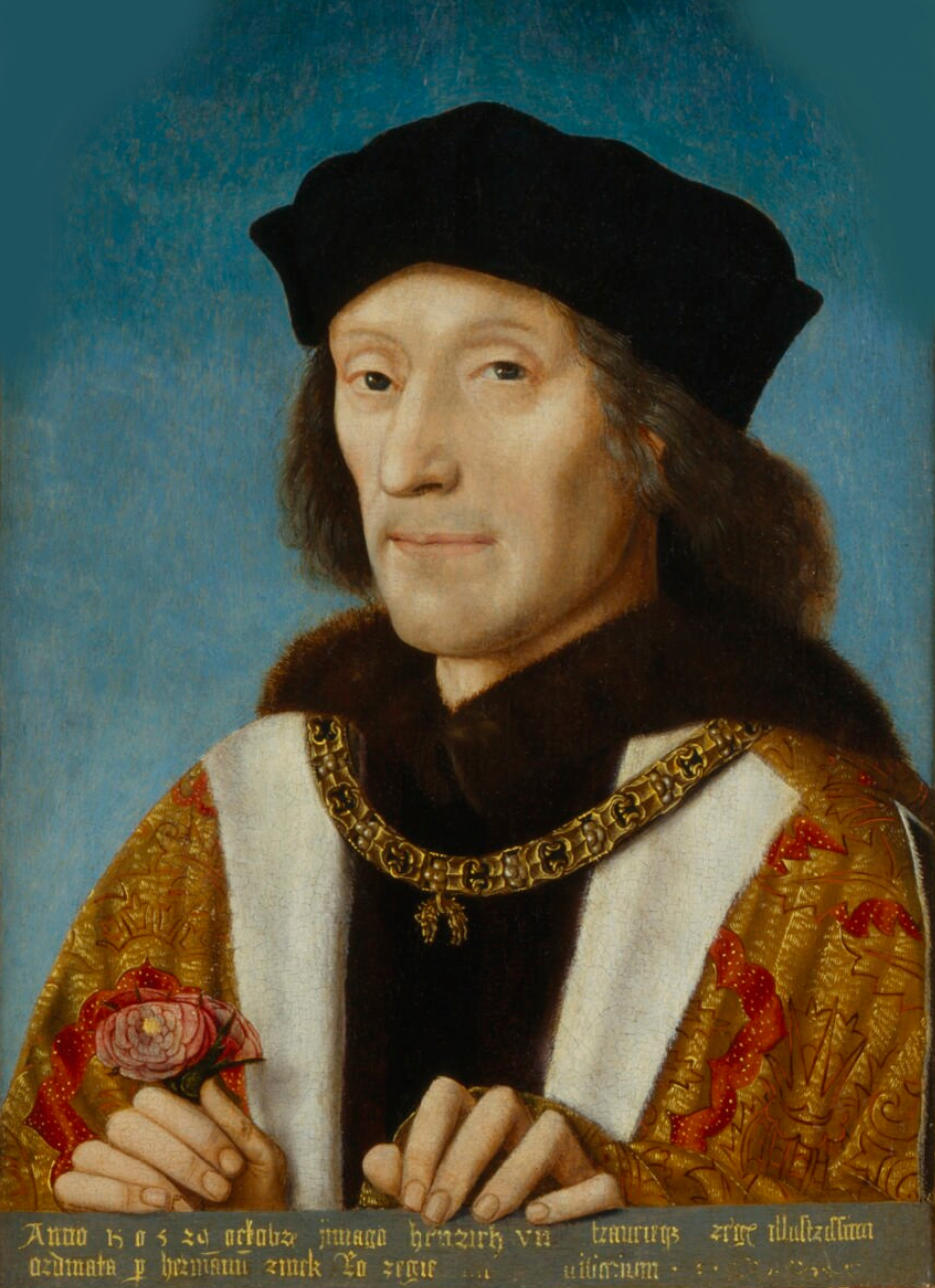
The Tudors took control when Henry VII became king after his defeat of Richard III at the Battle of Bosworth Field in 1485, but it is Henry VII’s son, Henry VIII, who is one of the best-known monarchs in history, largely due to his eccentricity and his atrocious behaviour towards his wives.


Tudor Governance
The Tudors effectively restored and consolidated the powers of the monarchy after the tumultuous Wars of the Roses. With Henry VII's ascension to the throne in 1485, the Tudors established stability through diplomatic marriages, prudent financial management, and the establishment of the Court of Star Chamber to enforce royal authority.
The court had evolved from meetings of the King's Council, with its origins going back to the mediaeval period. The "Star Chamber Act" of King Henry VII's second Parliament created a separate tribunal distinct from the King's Council.
Henry VIII further expanded royal power by centralising administration, asserting supremacy over the Church through the Act of Supremacy (1534), which “defined the right of Henry VIII to be supreme head on earth of the Church of England, thereby severing ecclesiastical links with Rome.”
Documents can still be found within parliamentary records in the UK.
He also focused on strengthening royal finances through the dissolution of monasteries. However, the Tudor monarchs also faced challenges from noble factions and parliamentary resistance, highlighting the ongoing tension between centralised authority and entrenched interests.
During the Tudor period, England was governed through a combination of royal prerogative, the Privy Council, Parliament, and the judiciary. The Tudors wielded executive authority, supported by a network of royal officials and justices of the peace responsible for local administration.
Parliament, though periodically convened, served primarily as a rubber stamp for royal policies rather than an independent legislative body. The Privy Council, composed of the monarch's closest advisors, played a crucial role in policymaking and governance, overseeing matters of state, law enforcement, and foreign affairs.
Despite occasional challenges, the Tudors maintained relative stability and effective governance throughout their reigns. The Tudor reign at this time was relatively stable, though life was not easy for the poor classes, and the average life expectancy was just 35 years.
Life in Tudor Britain saw most people living in the countryside, but some had taken to the towns or big Tudor cities like London, Bristol or Norwich.
The Tudor time was built around England’s agricultural industry, and many made their living from farming, but this was also a time of some considerable industrial growth, with the mining industry growing significantly.
The time saw progress in many ways, and many inventions including the flushing toilet! However, the poorer classes and more deprived areas saw a very difficult time.
“For the Tudors, life was an intensely physical experience, its quality dependent upon the health and liberty of the body, and its duration determined by the avoidance of serious illness, disease and accident.”
Amy Licence, British Scholar
Relationships With Foreign Powers
Under the Tudors, England experienced a shift in foreign relations, transitioning from the isolationist policies of the Wars of the Roses to active engagement in European affairs.
Henry VII pursued diplomatic alliances to secure his dynasty, after the war, French preoccupation with invasions in Italy made it hard to have a peaceful relationship, but the undeniable economic importance of England meant the Netherlands signed a peace treaty in 1496, as well as a trade treaty. Scotland had long been hostile towards the English, but Henry VII did manage a peace treaty, followed by a 1502 treaty blessing the marriage of James IV to Henry’s daughter Margaret.
Henry VIII pursued an assertive foreign policy, engaging in wars with France and Scotland and seeking to assert English dominance in continental politics.
Elizabeth I adopted a more cautious approach, balancing power dynamics through strategic alliances and military interventions. The reign of Elizabeth saw a quadrilateral relationship between England, the French Crown, the Huguenots and Scotland. Though there was a rivalry, France was undeniably the leading foreign cultural influence on the United Kingdom throughout this time.
The Tudors also secured the succession through diplomatic marriages and the passage of succession laws, ensuring the stability of the dynasty and the continuity of governance.
Social and Economical Changes in the UK
The Tudor era witnessed significant changes in English society and economy. The dissolution of monasteries and the redistribution of land under Henry VIII led to the rise of a new class of landowners, while the growth of commerce and trade spurred economic expansion.
The enclosure of common lands, however, exacerbated social inequalities and fueled discontent among rural communities. The influx of wealth from the New World bolstered England's economy, facilitating the growth of industries such as textiles, mining, and shipbuilding. Despite these economic advancements, poverty, unemployment, and social unrest persisted, underscoring the uneven distribution of wealth and power in Tudor society.
The Religious Changes of the Era
The Tudor era was a period of intellectual and religious change, marked by the Renaissance, the Reformation, and the rise of humanism. Humanist scholars like Thomas More and Erasmus promoted classical learning and critical thinking, while religious reformers such as Martin Luther and John Calvin challenged the authority of the Catholic Church.
The English Reformation, initiated by Henry VIII's break with Rome, led to the establishment of the Church of England and the dissolution of monasteries.
Elizabeth I's reign witnessed the consolidation of Protestantism and the emergence of a distinctively English religious identity, albeit amidst religious tensions and persecution. Intellectual and religious developments during the Tudor era laid the groundwork for the modernization of English society and the advancement of knowledge.
The Tudor Dynasty represents a transformative era in English history, which saw political consolidation, economic expansion, religious reform, and cultural revival. Through effective governance, diplomatic manoeuvring, and religious adaptation, the Tudors restored and developed the powers of the monarchy, securing their dynasty and shaping the course of English history. Despite challenges and conflicts, especially among certain classes, the Tudor era laid the foundation for modern England, leaving a lasting legacy of relative stability, cultural innovation, and national identity.
Summarise with AI:
Did you like this article? Rate it!


 Loading...