Henry VIII is one of England's most iconic and controversial monarchs, leaving behind a legacy that continues to intrigue historians and scholars to this day.
When you think of Henry VIII you may have a vivid picture in your head of what he looked like, and even his character traits. Of course, many people also know the fact that Henry VIII had so many wives, some of whom were beheaded for crimes including witchcraft.
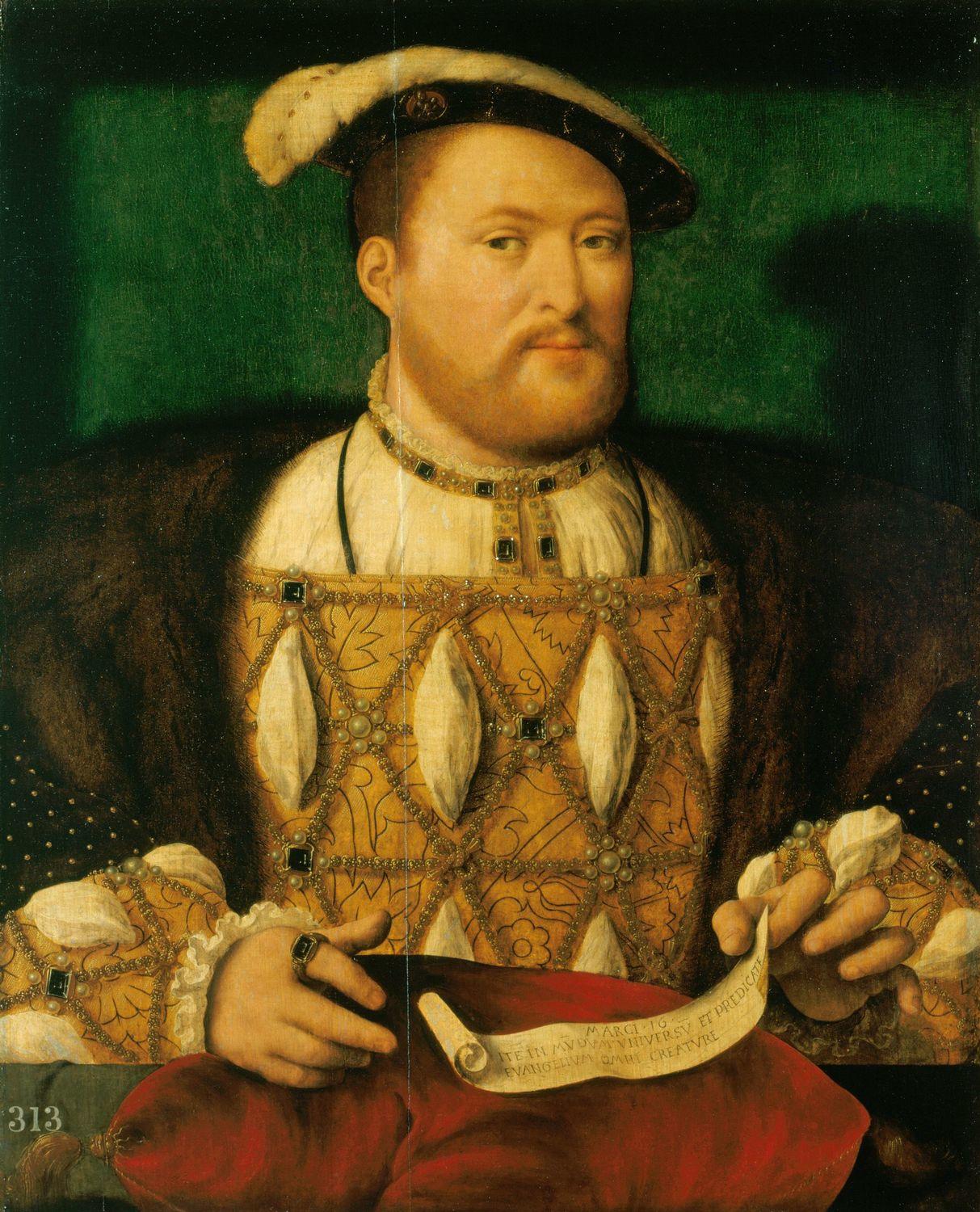
Henry VIII’s reign, spanning from 1509 to 1547, was marked by political upheaval, religious reform, economic growth, and personal intrigue. In this essay, we will explore Henry VIII's legacy in various aspects, including his approach to governance, foreign relations, society, economic development, and religion.
Henry VIII’s Time in Power
Henry VIII ascended to the throne following the death of his father, Henry VII, in 1509. He inherited a kingdom that had undergone significant transformation under his father's reign. Henry VII had implemented policies aimed at centralising royal authority, strengthening royal finances, and maintaining peace and stability.
Henry VIII initially sought to build upon his father's legacy by continuing his fiscal prudence and administrative reforms. However, he soon embarked on a path that diverged sharply from his father's cautious and pragmatic approach to governance.
Check out this timeline summarising some of the key events in Henry the VIII's reign:
| Year | Key Event |
|---|---|
| 1509 | Henry VIII ascends to the throne after Henry VII's death. |
| 1513 | Henry invades France, achieving victory at the Battle of the Spurs. |
| 1513 | Victory at the Battle of Flodden against Scotland. |
| 1521 | Receives the title "Defender of the Faith" from Pope Leo X. |
| 1527 | Pursues annulment from Catherine of Aragon, sparking the English Reformation. |
| 1533 | Marries Anne Boleyn after obtaining a papal annulment. |
| 1534 | Act of Supremacy declares Henry as the head of the Church of England. |
| 1536 | Execution of Anne Boleyn; Henry marries Jane Seymour. |
| 1536-1540 | Dissolution of the monasteries and confiscation of church lands. |
| 1540 | Marriage to Anne of Cleves annulled shortly after. |
| 1543 | Marries Catherine Parr, his sixth and final wife. |
| 1544 | Invades France, capturing Boulogne. |
| 1547 | Henry VIII dies, succeeded by his son, Edward VI. |
Check out this video for an overview of key events during the reign of Henry VIII.





Approach to Government
Henry VIII's approach to government saw a strong assertion of royal authority, symbolised by his famous assertion of Royal Supremacy. He sought to centralise power in the hands of the monarch, bypassing traditional checks and balances and elevating the authority of the Crown above that of Parliament and the Church. Henry relied on trusted ministers, such as Thomas Wolsey and Thomas Cromwell, to implement his policies and oversee the administration of government.
His domestic policies included the dissolution of the monasteries, the establishment of the Church of England, and the suppression of religious dissent.
Foreign Relations
Henry VIII's foreign policy was marked by a series of alliances, conflicts, and diplomatic manoeuvres aimed at securing England's position on the European stage.
His relationship with Scotland brought rivalry and conflict, including in the Battle of Flodden in 1513, where Henry's forces defeated the Scots. He sought alliances with European powers such as Spain and France, balancing power dynamics and protecting English interests abroad. However, Henry's ambitions often led to costly and inconclusive wars, straining England's resources and damaging its reputation on the continent.
“To the rest of the world the name of Henry VIII brought a shiver, and suggested an ogre whose nostrils breathed destruction and whose hand dealt scourgings and death; but to this boy the name brought only sensations of pleasure, the figure it invoked wore a countenance that was all gentleness and affection. He called to mind a long succession of loving passages between his father and himself, and dwelt fondly upon them, his unstinted tears attesting how deep and real was the grief that possessed his heart.”
Mark Twain, The Prince and the Pauper
Securing Succession to the Throne
Henry VIII's obsession with securing the succession led to a series of marriages, divorces, and political machinations that shaped the course of English history. His quest for a male heir led him to divorce his first wife, Catherine of Aragon, and break with the Catholic Church, establishing the Church of England and appointing himself as its supreme head.
His subsequent marriages to Anne Boleyn, Jane Seymour, Anne of Cleves, Catherine Howard, and Catherine Parr were motivated by political considerations as much as personal desire, as Henry sought to secure the Tudor succession and ensure the stability of his dynasty via a son and heir.
Society During Henry VIII’s Reign
Henry VIII's reign had a profound impact on English society, particularly in terms of social mobility, religious upheaval, and regional tensions.
The elites, including the nobility and gentry, enjoyed unprecedented opportunities for advancement and patronage under Henry's rule, while commoners experienced economic hardship and social unrest. The dissolution of the monasteries and the redistribution of church lands created new opportunities for land ownership and wealth accumulation, leading to increased social mobility and competition among the emerging middle class. There was still a lot of discontent in the working classes, religious upheaval and rebellion, such as the Pilgrimage of Grace in 1536, highlighted the deep-seated tensions between the Crown and its subjects.
Religion was a central theme of Henry VIII's reign, as he sought to assert his authority over the Church and impose his own vision of religious reform.
Henry's break with the Catholic Church, culminating in the Act of Supremacy in 1534, marked the beginning of the English Reformation and the establishment of the Church of England. He promoted Renaissance ideas of humanism and classical learning, fostering intellectual exchange and cultural renewal. However, Henry's religious policies involved both continuity and change, as he retained many traditional Catholic practices while implementing reforms aimed at asserting royal control over the Church and suppressing religious dissent.
Continuing Tudor Economic Development
Henry VIII's reign witnessed both periods of prosperity and economic downturns, driven by factors such as trade, exploration, and changes in agricultural practices. The growth of trade and commerce, facilitated by England's expanding network of overseas colonies and trading partners, fueled economic growth and prosperity.
However, economic stability was threatened by factors such as inflation, taxation, and the debasement of the currency, leading to periods of depression and social unrest. Henry's policies, such as the dissolution of the monasteries and the enclosure of common lands, also had significant economic implications, reshaping the agrarian landscape and redistributing wealth and power.
Henry’s Reign as Monarch
Henry VIII's reign left a lasting legacy on English history, shaping the course of politics, society, religion, and culture. His assertive approach to governance, foreign relations, and religion transformed England into a powerful and centralised monarchy, while his personal intrigues and marital dramas captivated the imagination of generations.
Despite his accomplishments, Henry's reign was also marked by controversy, conflict, and social upheaval, as he navigated the challenges of ruling a kingdom in transition. In the end, Henry VIII's legacy remains a complex and multifaceted subject of historical inquiry, reflecting the complexities and contradictions of the Tudor era.
Summarise with AI:
Did you like this article? Rate it!


 Loading...