After World War II, a new long-lasting conflict emerged - called the Cold War. Lasting from the late 1940s to the early 1990s, this period was marked by a significant geopolitical and ideological rivalry between two major powers at the time - the United States and the Soviet Union. However, the conflict differed from other more conventional wars as it wasn't waged on battlefields with armies. Instead, it revolved around political ideologies, economic tactics, and cultural impacts. Read on below to discover more about this topic.





What Did the Soviet Union and USA Disagree About?
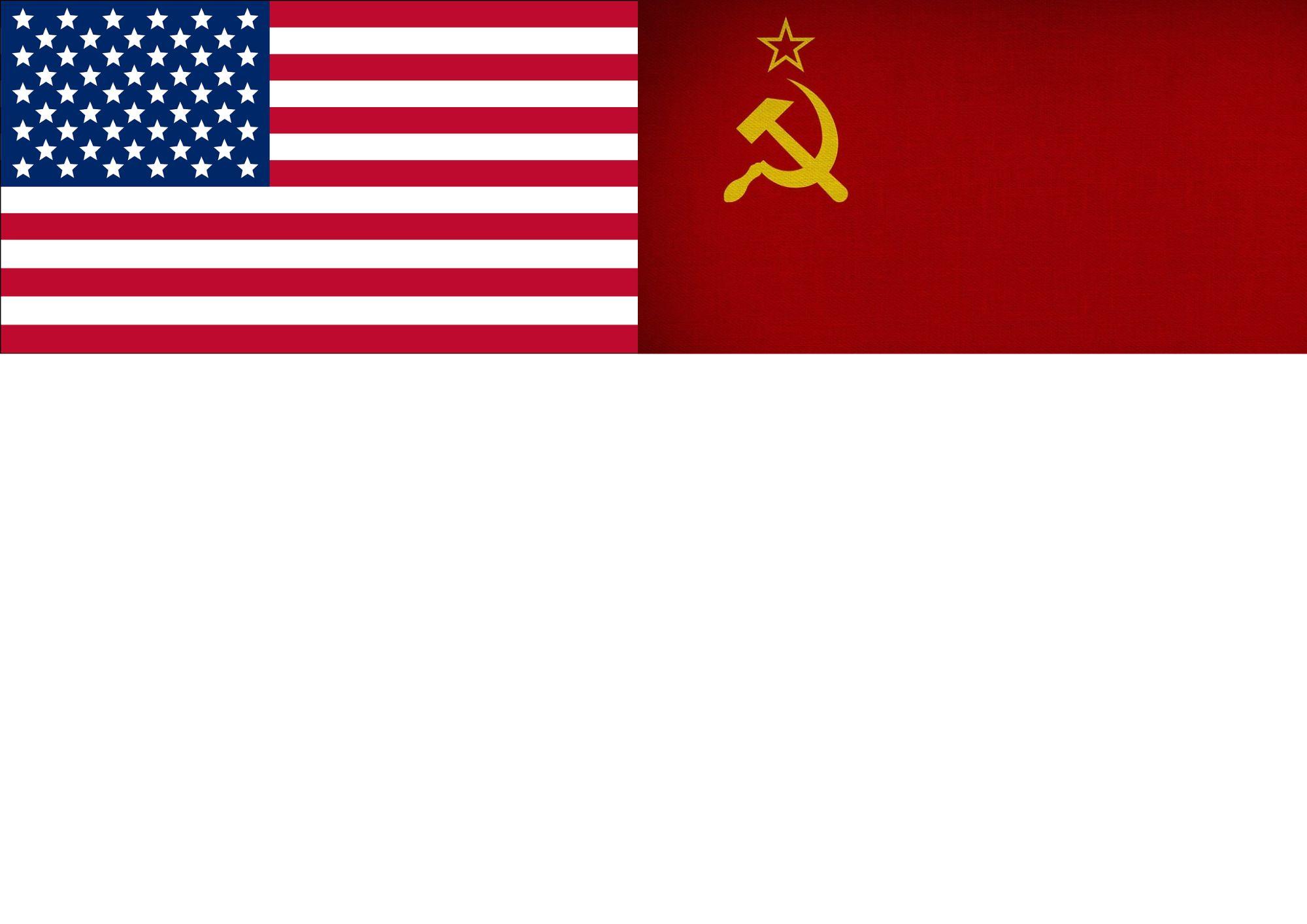
The Cold War was pretty much a massive tug of war over beliefs. The USA, which was all about democratic capitalism, believed in a society where businesses were owned by private folks and the government was chosen by the people.
Now, on the other side of the coin, you had the USSR which upheld the principles of communism and believed that the economy should be controlled by the state and that a single-party political system was best. This fundamental disagreement over how societies should function and be governed was a catalyst for how the Cold War would begin.
What Were the Yalta and Potsdam Conferences?
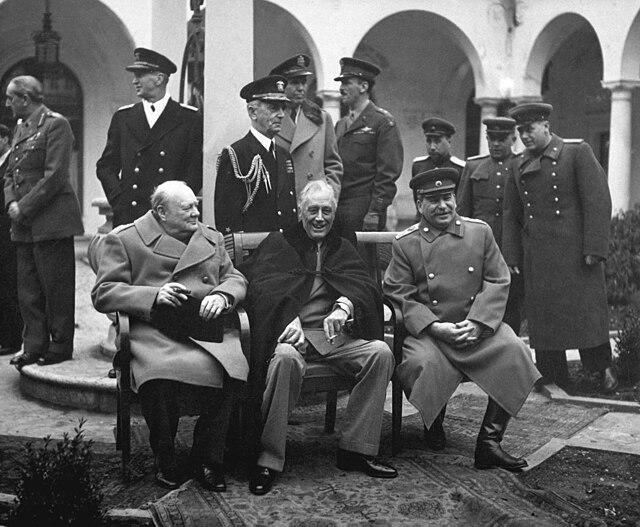
The Cold War's roots can be traced back to the significant meetings that took place at Yalta and Potsdam in 1945, where leaders from the USA, USSR, and the United Kingdom met to decide the post-war reorganisation of Europe.
At Yalta, the decision to divide Germany into occupation zones would be made - a move that would later become a significant point of conflict. The Potsdam Conference, which happened a few months later, only added fuel to the fire with more arguments and disagreements - especially about what would happen to Germany and the political scene in Eastern Europe.
How Was the Divide of Germany Related to the Cold War?
When the Allied powers divided Germany, it wasn't just about drawing lines on a map. This split was a big symbol of the ideologicalrift that defined the Cold War. The Western zones, under the influence of American and Western European liberalism, were a stark contrast to the Soviet-controlled Easternzone. This division would eventually lead to the establishment of two distinct German states - the Federal Republic of Germany (West Germany) and the German Democratic Republic (East Germany), both of whom were aligned with the opposing sides of the Cold War.
What was Churchill's Iron Curtain Speech?
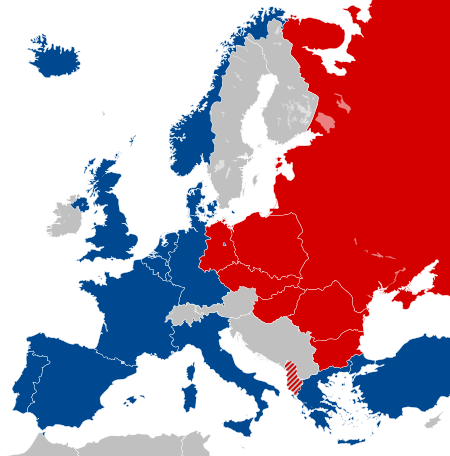
In 1946, Winston Churchill dropped a bombshell with his Iron Curtain speech. He described an "iron curtain" that had descended across Europe, effectively dividing the continent into two distinct parts - the democratic and capitalist West and the communist East. This metaphor would vividly illustrate the division of Europe but also highlight the escalating ideological divide between the superpowers.
What Was the Truman Doctrine?
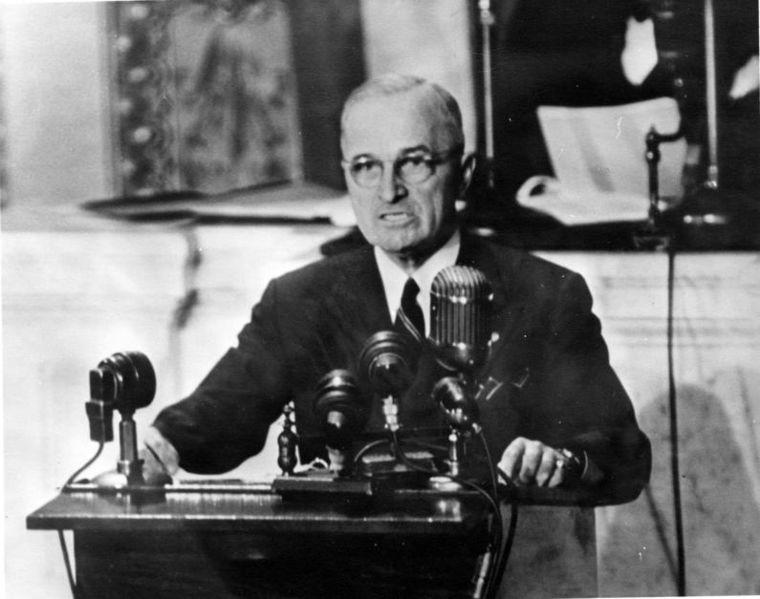
The Truman Doctrine, rolled out by American President Harry Truman in 1947, was a big shift in how the U.S. dealt with the world. This policy was all about stopping communism from spreading by helping out countries that were under threat from Soviet influence.
Truman's doctrine was first articulated in a speech to Congress on March 12, 1947, prompted by the geopolitical situation in Greece and Turkey at the time. This approach, notably applied in providing aid to Greece and Turkey, would show how dedicated America was to trying to stop the Soviets from gaining a global foothold.
What Role Did the Marshall Plan Play in the Cold War?
In 1948, the United States would then launch the Marshall Plan, an ambitious program designed to aid the economic recovery of Western European countries.
The Marshall Plan, officially known as the European Recovery Program (ERP), was an ambitious economic aid initiative spearheaded by the United States to rebuild and revitalize war-torn Europe after World War II. The plan aimed to modernise industry, improve trade, and increase productivity, as well as address food shortages and unemployment.
The plan was operational from 1948 to 1952 and had significant economic, political, and cultural impacts on the post-war world. Although the Marshall Plan was dressed up as humanitarian help, it had another side to it - by rebuilding these war-torn economies, the USA was trying to create a direct buffer against communism on the global stage.
Military Alliances: NATO and the Warsaw Pact
During the Cold War, making strong military alliances was very important. NATO (The North Atlantic Treaty Organization)was founded in 1949 by the United States, Canada, and some Western European countries, aimed at keeping the Soviet Union's military power in check.
On the other hand, the Soviet Union, along with Eastern European nations would go on to form the Warsaw Pact in 1955. Understandably, these moves deepened the division of Europe into two opposing military groups. Worryingly, these alliances were more than just defence strategies and could have gone a long way in raising the stakes for a potential military showdown in the future.
Espionage: A Shadowy Battlefield
The beginning of the Cold War also marked a significant increase in secret intelligence operations, with both the United States and the Soviet Union being deeply involved in a hidden battle to outsmart one another. In the cloak-and-dagger world of Cold War espionage, the role of spies and secret agents was key - it was a tense game where both sides were both suspicious and willing to go to great lengths to outdo each other.
For example, both the USA and the USSR had their own networks of spies. The United States, with the CIA established right after World War II, focused on collecting intel about Soviet military capabilities and technological developments. On the other side, the Soviet Union had the KGB, and some earlier intelligence agencies, working tirelessly to infiltrate the American government and scientific institutions and trying to snatch up any crucial information they could.
What Were the Global Implications of the Cold War?
The impact of the Cold War was global. In fact, it would lead to numerous proxy wars in Asia, Africa, and Latin America, where the USA and USSR supported opposing factions. Additionally, the Cold War also spurred the space race and the nuclear arms race, as both superpowers competed for technological and military supremacy. This period also significantly influenced global culture, media, and public perception, shaping ideologies and national identities across the world in the long run.
Conclusion
In summary, the Cold War was a massive political and ideological struggle between the USA and the USSR. The conflict arose from differing beliefs regarding democratic capitalism and totalitarian communism. For starters, the Yalta and Potsdam Conferences, addressing Europe's post war structure, and the division of Germany, highlighted the growing East-West divide.
Alongside this, Churchill's 1946 Iron Curtain speech symbolised the deep ideological split as well. All in all, the era was defined by key strategies like the Truman Doctrine and the Marshall Plan, underscoring the USA's efforts to contain communism and rebuild Europe.
What’s more, the formation of NATO and the Warsaw Pact further demonstrated the growing military rivalry between the nations. From here, the origins of the Cold War would go on to lay the foundation for a conflict that would shape global dynamics for decades - leaving a legacy that still influences international relations today.
Summarise with AI:
Did you like this article? Rate it!

 Loading...