Elizabeth I, often hailed as one of England's greatest monarchs, ruled over a period of remarkable political, cultural, and economic advancement known as the Elizabethan era. In this post, we will delve into the various facets of her reign, including her government, foreign affairs, society, economic development, religious landscape, and her legacy in the last years of her rule.
She had inherited a chaotic government following on from the mid-Tudor crisis, and her first role was to stabilise and remove some of the societal tensions.





Elizabethan Government
Elizabeth I's government was a delicate balance of power between the monarchy, Parliament, and her court, and it largely worked. At the heart of her administration was the Privy Council, composed of trusted advisors and ministers such as William Cecil, Lord Burghley, and Sir Francis Walsingham.
Elizabeth's court was a vibrant hub of political intrigue and factional rivalries, as ambitious courtiers vied for influence and favour. Despite these rivalries, Elizabeth's astute leadership and firm control maintained stability and coherence within her government.
Elizabeth faced some opposition from a Privy Councillor, the Earl of Essex, who tried to organise a rebellion, but this was unsuccessful, and in Tudor style, he was beheaded after an accusation of treason.
The Privy Council met daily, but had little power compared to today’s Parliament, and only met on request of the queen. The Parliamentary power did grow, though and had some conflicting views with Elizabeth, especially over religion as some Puritans pushed for Protestant changes in the country.
Foreign Affairs
Foreign affairs presented significant challenges for Elizabeth, particularly in relation to issues of succession and relations with Catholic powers. The question of succession loomed large throughout her reign, exacerbated by her refusal to marry and produce an heir.
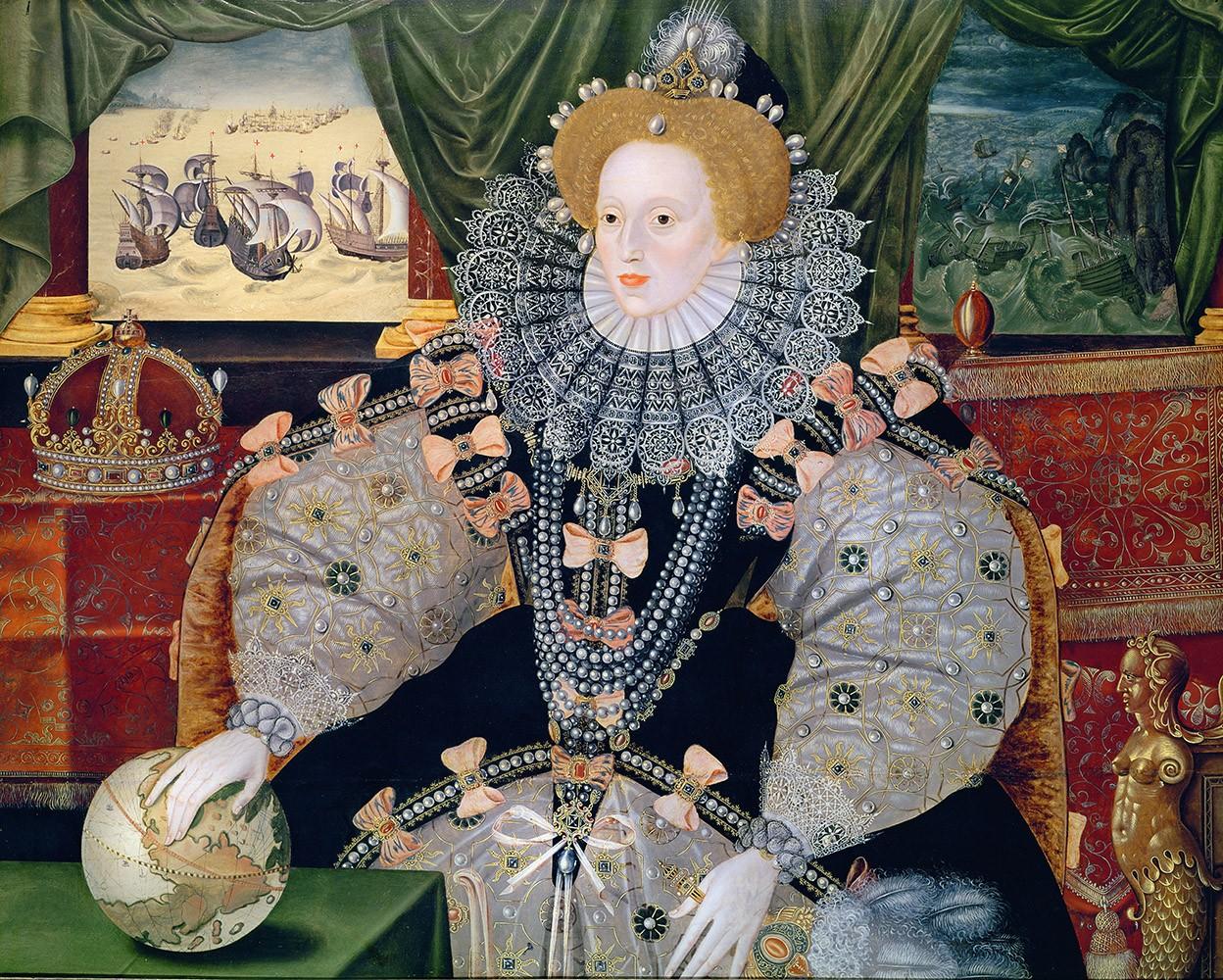
The presence of Mary, Queen of Scots, as a potential rival claimant to the throne, fueled tensions and conspiracies, leading ultimately to Mary's execution in 1587. Relations with Spain, culminating in the failed Spanish Armada of 1588, underscored the broader conflict between Protestant England and Catholic Europe. England eventually triumphed during the Armada and this further strengthened the country’s position.
Society Under Elizabeth I
Elizabethan society underwent a period of profound transformation, in both continuity and change. The nobility retained their traditional status and privileges, while the emerging middle class prospered through trade, commerce, and land ownership.
However, social discontent simmered beneath the surface, fueled by economic hardships, enclosure, and inflation, hitting the poorest in society the hardest as well as impacting some geographical areas such as the North of England. Rebellions such as the Northern Rebellion of 1569 and the Essex Rebellion of 1601 highlighted the deep-seated tensions within English society.
Economic Development
Economic development flourished under Elizabeth's rule, driven by trade, exploration, and colonisation which helped to drive income to the English economy. The era saw the expansion of England as a maritime power, with explorers such as Sir Francis Drake and Sir Walter Raleigh venturing to the New World in search of wealth and opportunity.
Trade with the East Indies and the establishment of trading companies such as the East India Company bolstered England's economy and contributed to its prosperity. However, economic fluctuations and periods of depression also occurred, challenging the stability of Elizabethan society.
There were attempts to assist the poorer in society including “poor relief” and though the economy was flourishing in many ways not all of this trickled down to the poorer in society. The English population grew by more than 1 million in Elizabeth’s time, especially booming in the towns and cities, causing more people to struggle.
Religious Developments
Religious developments during Elizabeth's reign reflected the complex interplay of change and continuity. Elizabeth sought to establish a moderate form of Protestantism that could unify her realm while avoiding the religious extremism that had plagued the preceding reigns of the Tudors, and defined Mary’s reign.
The Elizabethan Religious Settlement of 1559 established the Church of England as the state church, maintaining certain Catholic rituals and practices while asserting royal supremacy.
Culture
This period also witnessed a flourishing of intellectual and artistic achievements, known as the English Renaissance, which produced some of the greatest works of art, literature, and music in English history. This was the time of Shakespeare, after all, and his influence on culture was absolutely huge. There were also artists working in the country, creating incredible work, and the Renaissance period would last until into the 17th century.
The Last Years of Elizabeth
By the last years of Elizabeth's reign, England had emerged as a formidable power on the world stage.
Politically, Elizabeth's rule had brought stability and prosperity to England, consolidating her position as one of Europe's most influential monarchs. Economically, England had experienced a period of growth and expansion, fueled by trade, exploration, and colonising other countries.
Religious tensions continued throughout the reign, but Elizabeth's moderation and pragmatism had helped to maintain relative peace and stability within her realm. Socially, England was undergoing rapid transformation, as the rise of the middle class and the expansion of trade brought new opportunities and challenges to society.
Elizabeth I's reign was a transformative period in English history, marked by political intrigue, cultural flourishing, and economic growth. Her legacy as the Virgin Queen and the Golden Age of the Elizabethan era continues to inspire and captivate historians and admirers alike, cementing her place as one of England's most iconic monarchs.
On her last night alive, Robert Cecil told her that she must go to bed, but Elizabeth was not impressed. She snapped: "Must is not a word to use to princes, little man."
Elizabeth was known as being curt, but also very intelligent, and the way she navigated politics saw her have a very long reign (especially for the era).
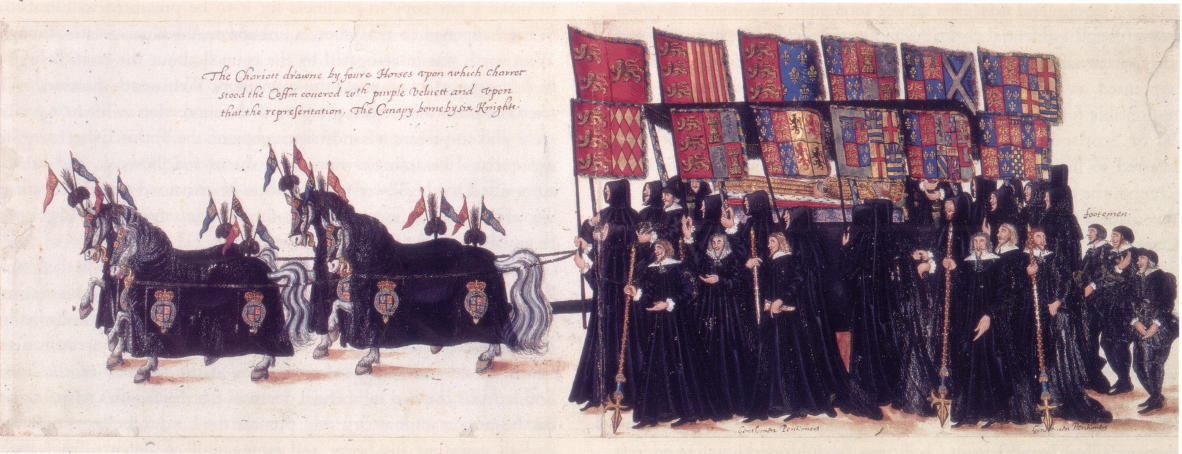
She died on 24 March 1603 at Richmond Palace, and soon plans would be put in place for James to succeed her. Elizabeth had never married or had children. King James had a strong claim to the throne. James was Elizabeth's nearest royal relative and both were descendants of Henry VII, who was the very first Tudor king. He would be installed as the country’s new leader.
Summarise with AI:
Did you like this article? Rate it!


 Loading...