In this article, we will discuss the reasons for controlling invasive alien species. Moreover, we will also explain what role do the International Union for the Conservation of Nature (IUCN) and the Convention on International Trade in Endangered Species of Wild Fauna and Flora (CITES) play in the conservation. So, let us get started.


What is Invasive Species?
An invasive species is defined as:
A species that has entered into an ecosystem where it was previously alien (unknown) is referred to as invasive species.
An invasive species can naturally move into an ecosystem due to migration or expansion of their habitat. However, incidents of invasive species can be caused by humans. The majority of the recorded incidents of invasive species are caused by humans.
Humans introduce invasive species to an ecosystem by:
- Intentionally collecting and trading species between countries through ships
- Unintentionally providing transport for invasive species to a new ecosystem
- Intentionally introducing unknown species to control pests
Example of an Invasive Species
One of the UK’s most invasive non-native plant species is Japanese knotweed. Many natural population controls exist for Japanese knotweed in its natural habitat in Japan. The unpredictable climate and volcanic ash deposits over the ground are natural population controls in Japan. In the 19th century, a German botanist who was fond of its beauty bought this plant species in the UK. Because there is a difference in environmental conditions in UK and Japan, hence this plant did not face any population controls in the UK. Consequently, the population of this plant grew uncontrollably and spread across the UK. This plant grows quickly, breaks up tarmac, and blocks out the sunlight completely for the native plant species.
Issues with Invasive Unknown Species
The natural process of evolution is vital for a balance of an ecosystem. Because of the natural process of evolution, the environment the species lives in, strongly impacts the adaptations that are essential for the survival of that species in that environment.
Upset an Ecosystem
A non-native invasive species will have adapted to survive in different environmental conditions. Hence, they upset the balance when they move to a new ecosystem. In a new ecosystem, the invasive species will face little to no competition in terms of population controls. It means that they will have no competitors or predators. Consequently, their population will grow uncontrollably and affect other species in an ecosystem.
Competition with Native Species
Competition may exist between invasive and native species that occupy the same niche. As a result, the native species may become extinct. This competition can exist in terms of soil, prey, light, space, and nutrients.
Impact on Predators
Several invasive species can fight with their predators successfully which can result in a huge decline in their prey species. Moreover, invasive species can bring new diseases to an ecosystem to which the native species possess no natural immunity. Hence, in this way, the biodiversity of an ecosystem is negatively affected which results in a decline in productivity.
Impact on Humans
We can also face the negative impacts of an invasive species that has taken over an ecosystem. The imbalance of an ecosystem results in the spread of novel diseases and irritants to the skin or respiratory system. Furthermore, the country’s economy faces negative consequences of this invasion when it has to spend a massive amount of its resources on controlling the invasive species. In the past, some plant species blocked the waterways which stopped travel temporarily.
Example – The Cane Toad in Australia
In the early 1900s, the sugarcane crop in Australia faced a major issue as insect pest was destroying the crop. Because of this, major economic losses occurred for several farmers. There was a dire need for biological control so a non-native cane toad from Hawaii was introduced to Australia. Within a short period, the cane toad numbers grew quickly because of the absence of predators. The cane toad invaded other habitats outside of the sugarcane plantations. Other species faced negative consequences of this invasion.
When consumed, the cane toad can prove toxic. It especially proved fatal for the endangered marsupial carnivore, the northern quoll, because it used to prey on the cane toad. It also brought greater competition for food and resources for other amphibian species. The cane toads often preyed on the eggs of ground-nesting birds.
What Role do IUCN & CITES Play in Conservation?
International cooperation is critical for the success of conservation efforts. There are many agreements and authorities within and between countries to safeguard and conserve the species worldwide.
IUCN
IUCN (The International Union for the Conservation of Nature) is:
“The global authority on the status of the natural world and the measures needed to protect it”
What are its duties?
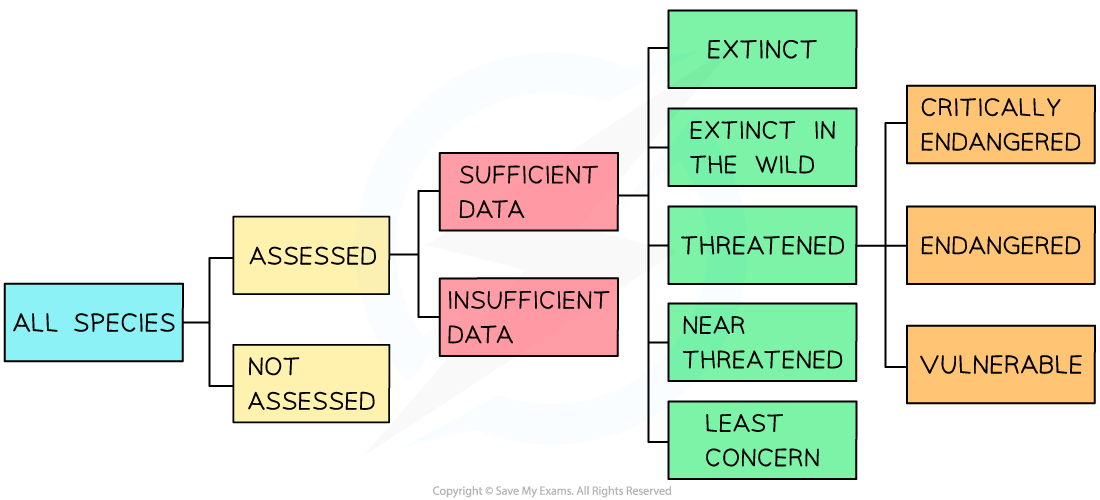
IUCN plays a crucial role in assessing the conservation status of animal and plant species around the world. This authority has its classification system and has many different categories and levels that a species can belong to based on their population numbers, and the threats and risks to those populations. Data and modeling help scientists estimate the kind of category a species should belong to.
CITES
CITES (The Convention on International Trade in Endangered Species of Wild Flora and Fauna) refers to a global agreement that is signed by more than 150 countries
Objective
The primary objective of CITES is to control the trade of endangered species and their related products. For instance, the elephants and their ivory tusks. CITES classifies endangered species into the following three categories:
- Appendix I: It includes the endangered species that face the greatest risk of extinction. An example of such a species includes the red panda.
- Appendix II: It includes the species that are not endangered or facing extinction currently, however, can face in the future if the trade is not carefully monitored. The example includes a Venus fly trap.
- Appendix III: It includes the species when a company requests to control the trade of the species to prevent its overexploitation. The example includes a two-toed sloth in Costa Rica.

Application of Trading Regulations
Different trading regulations that apply to each appendix are discussed below:
- The trade of the species and the related products in appendix I is completely prohibited
- The Trade of the species in appendix II is contingent on the issuance of an export permit by the relevant countries
- The controlled trade of the species in appendix III is contingent on permits.
Scientists are continuously updating the database by including new species and reviewing the status of existing species. There are issues with the CITES listing that still need to be addressed:
- The price of the endangered species increases due to its illegal trade
- People are more prone to break the law because of the increased economic value of the species
Summarise with AI:
Did you like this article? Rate it!


 Loading...