In this article, we will discuss the mitotic cell cycle and role of telomeres in detail. So, let us get started.


The Cell Cycle
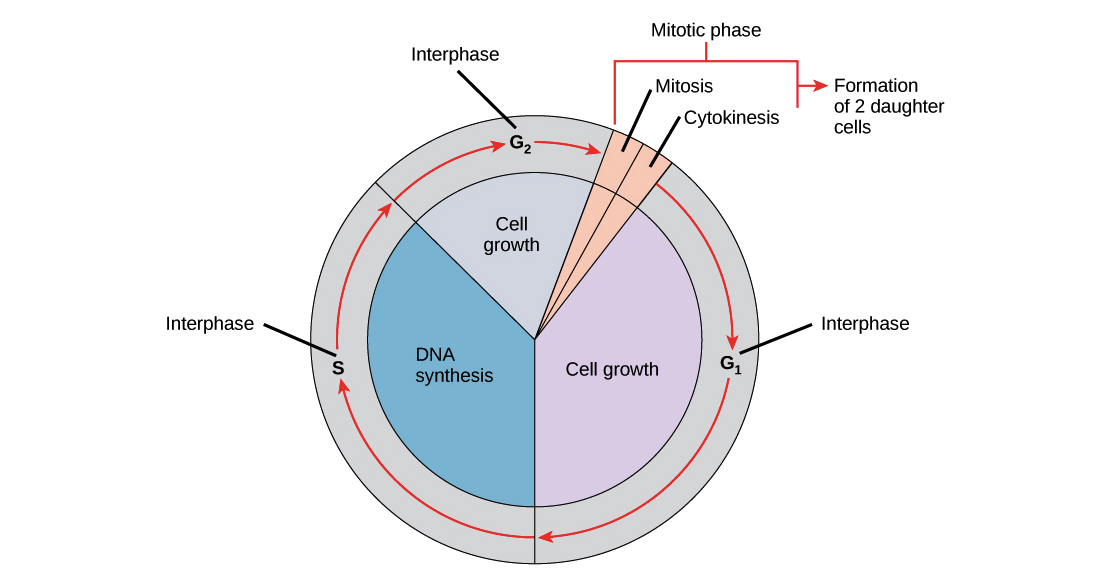
The cell cycle refers to the controlled sequence of events that take place between one cell division and the next. There are three phases of the cell cycle:
- Interphase
- Nuclear division known as mitosis
- Cell division referred to as cytokinesis
The length of the cell cycle varies and depends on environmental factors such as the type of the cell and the organism. For instance, the division of onion root cells takes place every 20 hours. However, the division of human intestine epithelial cells takes place once every 10 hours. The chemical signals known as cyclins trigger the movement from one phase to another.
In the next section of the article, we will discuss each of the three phases of the cell cycle in detail.
Interphase
The increase in mass and size of the cell occurs during the interphase. Besides this, the cell also carries out its normal functions such as synthesis of proteins and replication of DNA ready for mitosis.
There are three phases of interphase:  phase, S phase, and
  phase.
- At some point during the phase, the cell receives a signal to divide again
- The DNA in the nucleus replicates which results in each chromosome consisting of two similar sister chromatids.
- This phase of the interphase stage of the cell cycle is referred to as the S phase, where S stands for the synthesis of DNA. This phase is relatively shorter.
- The gap that occurs between the last cell division and the S phase is known as phase, where G denotes the gap
- Cells make the RNA, enzymes, and other proteins that are critical for growth during phase
- The phase occurs between the S phase and the subsequent cell division event
- The cell grows continuously and the new DNA that is synthesized is checked during the phase. Besides this, during this phase, several errors are usually repaired.
- In the phase, other preparations for cell division are also made. For instance, tubulin protein is produced which is employed to make microtubules for the mitotic spindle.
- Hence, we can say that the interphase is a combination of , S, and .
Nuclear division (Mitosis)
The mitotic phase follows the interphase and is referred to as the M phase, where M stands for mitosis.
The mitotic phase involves a series of processes during which the replicated DNA condenses into visible chromosomes. These chromosomes are aligned, segregated, and transferred to the new daughter cells. Microtubules are specialized structures that plan the movement of chromosomes. The growth of the cell stops during the mitosis phase. Mitosis is further divided into the following four phases:
- Prophase
- Prometaphase
- Metaphase
- Anaphase and telophase
Sometimes, we do not consider prometaphase as a distinct phase. These phases result in the division of the cell nucleus, also referred to as karyokinesis, and the segregation of cytoplasm to create two new daughter cells known as cytokinesis.
Cytokinesis
It takes place after the M phase. When the nucleus has divided into two genetically identical nuclei, the entire cell divides and one nucleus moves into each cell to form two genetically identical daughter cells. Cytokinesis in animal cells includes constriction of the cytoplasm between two nuclei. In plant cells, cytokinesis involves the formation of a new cell wall.
In the next section of the article, we will discuss telomeres and their importance in detail.
What are Telomeres?
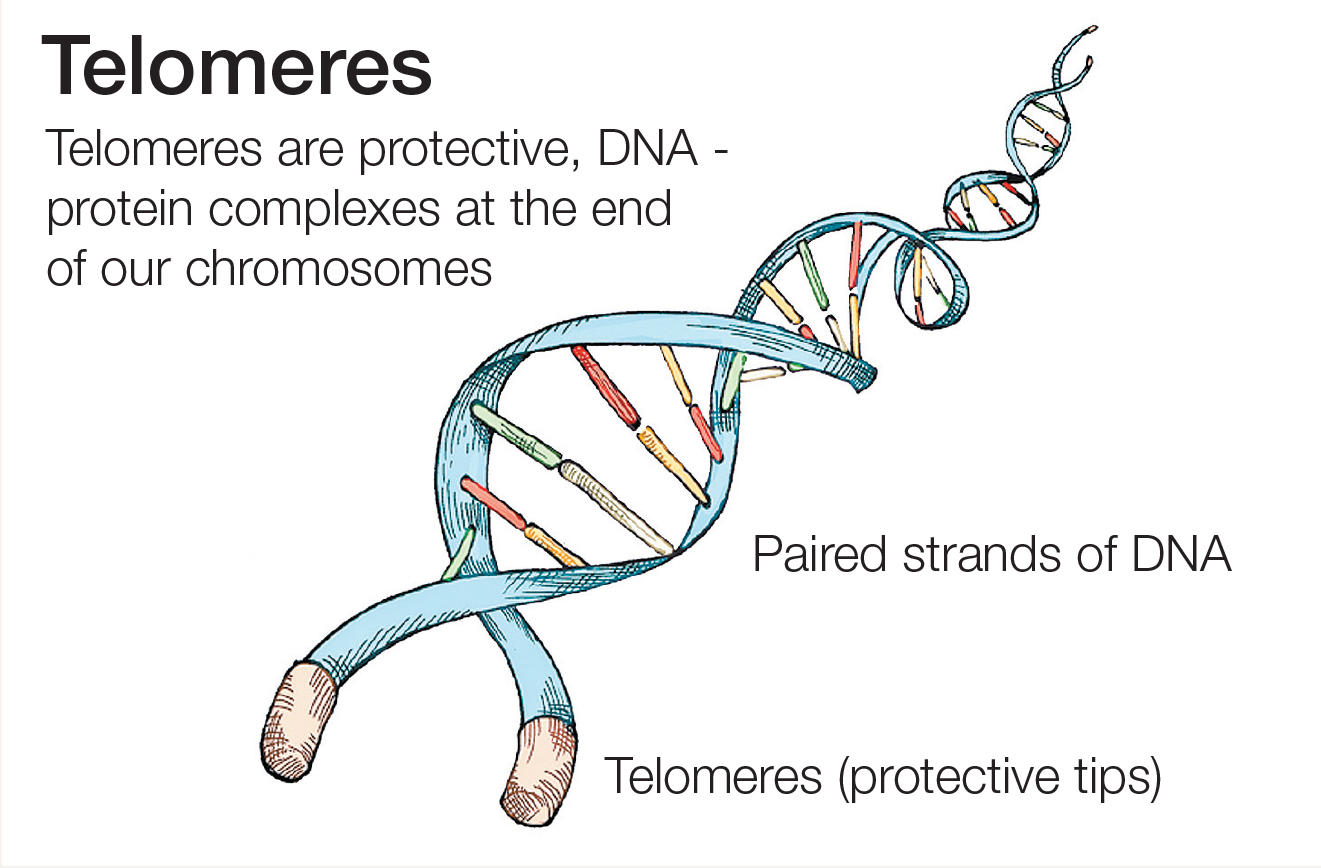
Telomeres refer to the unique cap-like structures that are found at the end of each DNA strand. The name telomere is a combination of two ancient Greek words: telo means end and meros means part. Hence, the literal meaning of the word telomere is the ending part. Telomeres are regions of repetitive nucleotide sequences that prevent the damage of DNA. Almost all the eukaryotes have telomeres. The main purpose of the telomeres is to protect the terminal ends of the chromosomes from damage and ensure the integrity of DNA.
Length of telomeres
Different organisms have varying lengths of telomeres. According to research, the yeast has approximately 300 base pairs that make the length of the telomere. By contrast, in humans, several thousand base pairs are present in telomeres. These arrays occur in the form of six to eight base pairs that are repeated many times.
Importance of telomeres
- The protective structures known as telomeres seal the ends of the chromatids in chromosomes. They are composed of non-coding DNA. The non-coding DNA is DNA that does not contain genes. It is composed of short base sequences that are repeated many times.
- In telomeres, the base guanine (G) is widely present in one strand, whereas the complementary base cytosine (C) is abundantly found in the other strand
- The primary function of telomeres is to ensure that the extreme ends of the DNA molecules are included in the replication of DNA during mitosis. Remember that the enzyme that takes part in DNA replication cannot run right to the end of the DNA molecule and stops a little before the end.
- The piece of genetic information can be lost during the DNA replication if the end part contains an important gene. In each further cell division, there could be a loss of a little more genetic information.
- Hence, telomeres play the role of the buffer region of non-essential DNA and ensure that no critical coding sections near the ends of the DNA molecules are missed out during the replication process.
- This prevents the loss of genes during cell division and ensures continuous replication of the cell. It should be kept in mind that the loss of important genes can result in the death of the cell.
- To minimize the risk of losing genes, most cells contain an enzyme referred to as telomerase that has additional bases at each end.
- Few cells, usually the specialized cells, do not contain telomerase to “top up” their telomeres, and hence the cell dies after a specific number of cell divisions. This is associated with the ageing process.
Summarise with AI:
Did you like this article? Rate it!


 Loading...