In this article, we will discuss what are the advantages of using recombinant human proteins to treat disease, using the examples of insulin, factor VIII, and adenosine deaminase.


Recombinant Human Proteins
A recombinant DNA (rDNA) can be defined as:
DNA that has been modified through the introduction of nucleotides from another source is referred to as recombinant DNA (rDNA).
What are Transgenic and Genetically Modified Organisms?
A transgenic organism refers to an organism that contains nucleotides from a different source. On the other hand, any organism that contains an introduced genetic material is referred to as a genetically modified organism (GMO).
Recombinant Proteins
Original proteins are manipulated to produce recombinant proteins. To produce recombinant proteins (RP) recombinant DNA is used. Microorganisms like bacteria, yeast, or animal cells in culture generate recombinant proteins. These proteins are employed by researchers and scientists for the research and treatment of diseases such as cancer, hemophilia, infectious diseases, and diabetes.
To produce most of the recombinant human proteins, eukaryotic cells are used instead of prokaryotic cells. This is because the eukaryotic cells will carry out post-translational modification as they have Golgi Apparatus and enzymes, which are needed to produce an appropriate human protein.
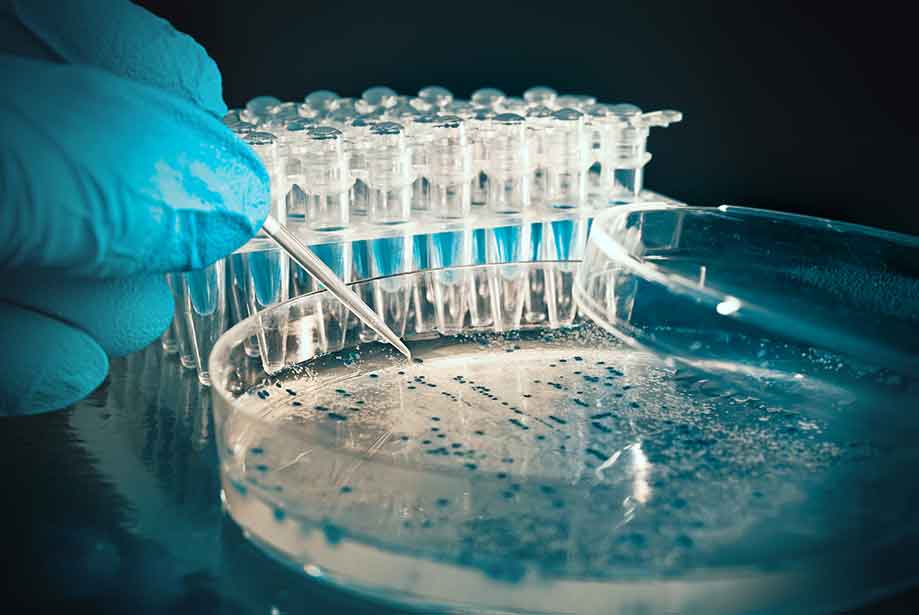
Advantages of Using Genetic Organisms to Produce Recombinant Human Proteins
There are many benefits of using genetic organisms to produce recombinant human proteins. These advantages are explained below:
- They are an inexpensive option to produce large volumes. It implies that the availability is unlimited
- They are simpler to use for this purpose as compared to the prokaryotic cells
- They produce many proteins quickly
- They are readily available
- The proteins produced are engineered so that they can be identical to the human proteins
- Many benefits are reaped after the modification of these proteins
- It can address the moral and ethical concerns of the people who are against using cow or pork-produced proteins
Insulin
In 1982, insulin was the first ever recombinant human protein approved for use in diabetic patients. To produce the insulin, the bacteria plasmids are altered to incorporate the human insulin gene. The enzyme restriction endonucleases are used to cut open plasmids and DNA ligase is employed to unite the plasmid and human DNA together.
After that, these recombinant plasmids are inserted into Escherichia coli through a transformation that involves a bath of calcium ions followed by electric shock or heat. After the markers identify the transgenic bacteria, they are isolated, purified, and placed into fermenters having ideal conditions. Through the process of binary fission, the transgenic bacteria multiply and are expressed as the human protein – insulin which is extracted and purified afterward.
Benefits of Using Recombinant Insulin
The benefits of using recombinant insulin for scientists are discussed below:
- Recombinant and human insulin are identical to each other unless the recombinant insulin is altered to have different attributes like acting quickly which makes it beneficial to take immediately after a meal or acting gradually
- To make recombinant insulin, a reliable supply is available that can meet the demand. It implies that there is no need to depend on the meat stock
- With this, scientists can face lesser moral, ethical, and religious objections from the people who are against using the proteins from cows and pigs
- The recombinant insulin faces lesser side effects, rejection issues, or allergic reactions
- It is cost-effective as large volumes can be produced
- It is beneficial for people who have animal insulin tolerance
Factor VIII
Factor VIII refers to a blood clotting protein that cannot be produced by hemophiliacs.
How is factor VIII produced?
The genetic modification of kidney and ovary hamster cells produces Factor VIII. After modification, these recombinant cells are placed into a fermenter and then they are cultured. Because of the optimal environment in the fermenter, the hamster cells continuously express Factor VIII which is then extracted and purified to be used as an injectable treatment for hemophilia disease.
Advantages of Using Recombinant Factor VIII
The benefits of using recombinant Factor VIII for scientists are discussed below:
- Since the proteins are not extracted from human blood, hence there are fewer ethical, moral, or religious concerns
- With recombinant Factor VIII, the risk of transmitting disease or infection becomes low
- The rate of production of recombinant Factor VIII is quite high
Adenosine Deaminase
Adenosine deaminase (ADA) is an enzyme that treats the inherited condition known as Adenosine Deaminase Deficiency. ADA deficiency causes Severe Combined Immunodeficiency (SCID) because of the damaged immune system.
How is ADA enzyme produced?
To produce an ADA enzyme, the larva of the cabbage looper moth is genetically modified by using the virus vector. It is then employed to treat those patients who are waiting for gene therapy or cannot undergo gene therapy due to certain reasons.
Benefits of Using Recombinant Adenosine Deaminase
The advantages of using recombinant adenosine deaminase for scientists are explained below:
- Since the proteins are not extracted from cows, hence the scientists face fewer ethical, moral, or religious concerns
- There is less probability of transmitting a disease or infection from cows
- The enzyme can be produced more reliably
- Scientists can produce many proteins quickly
Severe Combined Immunodeficiency (SCID)
The enzyme adenosine deaminase is critical for the functioning of the immune system. Hence, when a person cannot produce ADA enzyme, then he may get a condition known as “Severe Combined Immunodeficiency (SCID)”.
The absence of this enzyme can prove fatal for children because they can catch common infections. The children diagnosed with this condition are kept isolated inside the plastic bubbles.
How SCID is Treated by the Scientists?
For the treatment of SCID, scientists have employed ex vivo sematic gene therapy. In this therapy, a virus is used to transmit a normal allele for ADA into T-lymphocytes removed from the patient. After that, the cells are returned through an injection. This is not a permanent cure because, over time, the body replaces the T-lymphocytes which necessitates regular transfusion after every three to five months for the proper functioning of the immune system.
In the past, retroviruses were used as vectors, however, these viruses used to insert their genes randomly into the host’s genome. It implies that they could insert the gene into another gene or into a regulatory sequence of a gene that can cause cancer.
Children got leukemia initially because of this treatment, hence the researchers switched to using adeno-associated or lentiviruses as vectors. Although lentiviruses also insert their genes into the host genome randomly, however, they can be modified so that they cannot replicate. On other hand, adeno-associated viruses do not insert their genes into the host genome, and hence the genes do not get transferred onto the daughter cells during the cell division. This is a problem with cells having a short life, for instance, lymphocytes. However, there has been no issue when used with cells having a longer life like the liver cells.
Summarise with AI:
Did you like this article? Rate it!

 Loading...