Functions are essential tools in mathematical modelling, allowing us to map inputs from a domain to outputs within a range. When analysing how functions behave at extreme values, mathematicians look at whether the outputs are confined within specific limits. Understanding whether a function is constrained or can grow infinitely is a key aspect of A-Level Mathematics and graph theory.


Theory
A function is described as bounded if its outputs are restricted within certain barriers on a coordinate grid. We categorise these boundaries based on whether they limit the function from above, from below, or both.
Bounded from Above
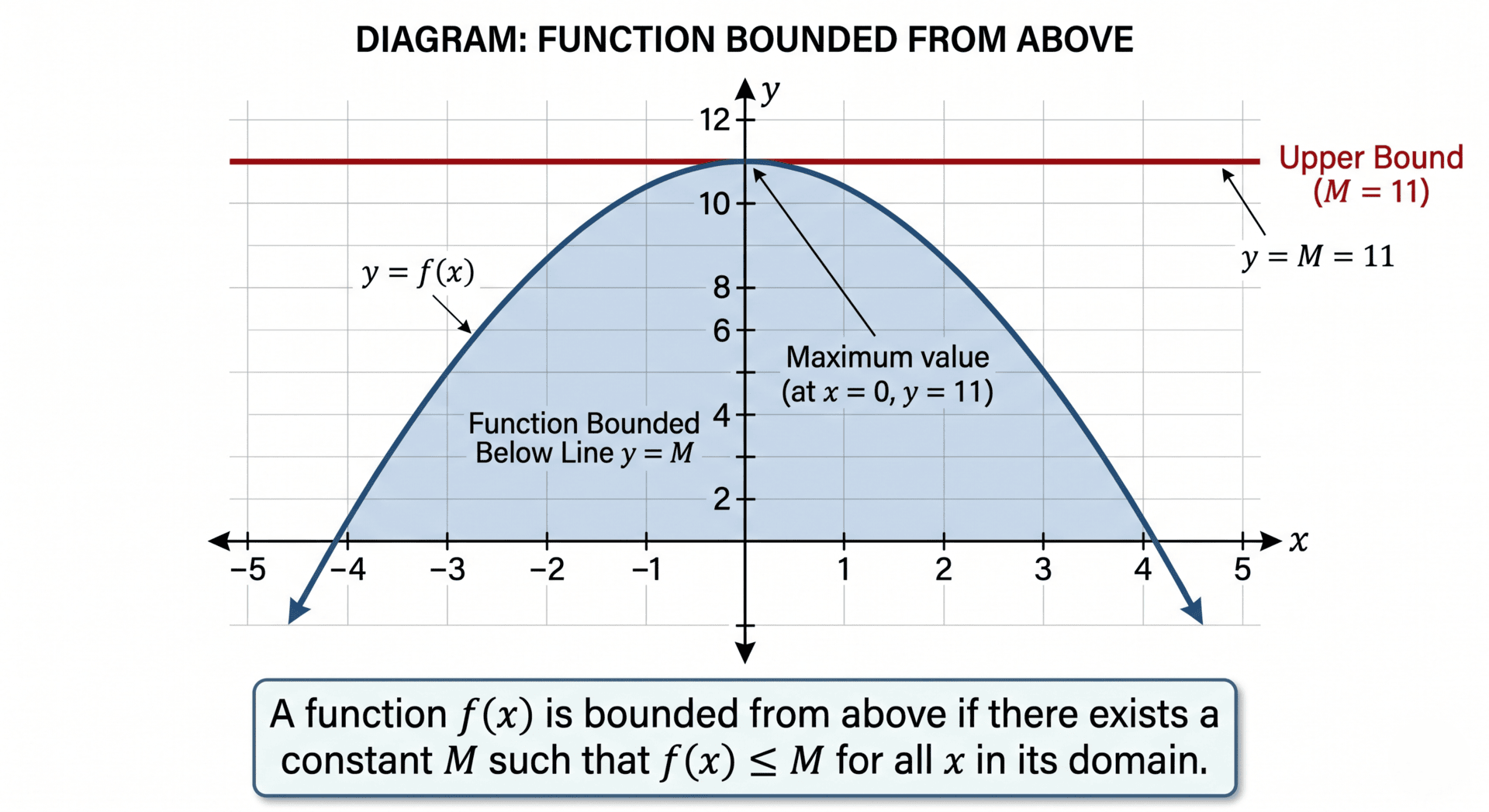
A function f(x) is bounded from above if its outputs can never exceed a specific real number, denoted as M. This number M is called an upper bound.
Formal definition:
for all elements x in the domain.
In terms of graphical behaviour, you can draw a horizontal line y = M such that the entire curve lies on or below it. For instance, a negative quadratic graph has a maximum turning point that serves as its sharpest upper bound.
Bounded from Below
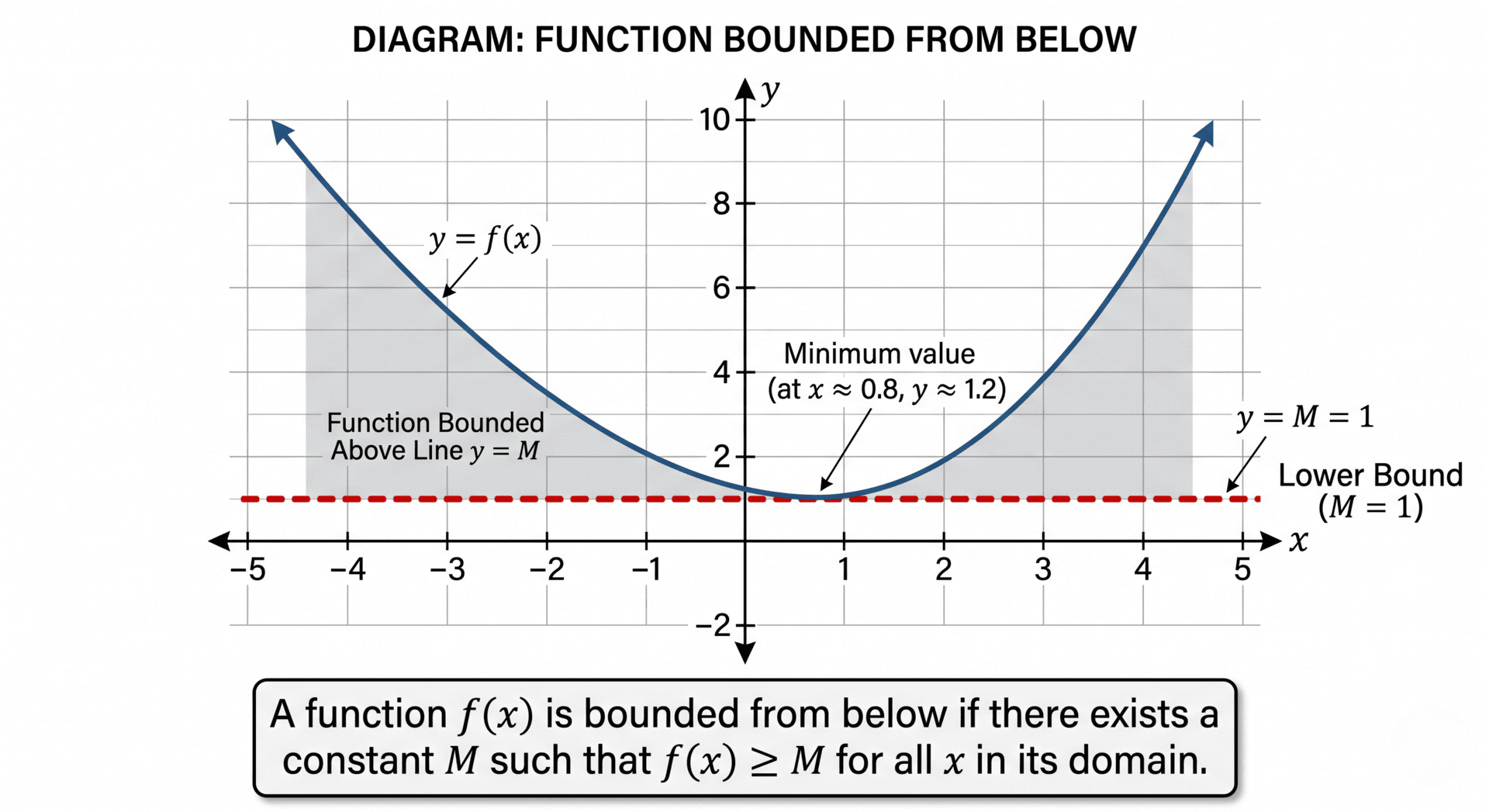
A function f(x) is bounded from below if its outputs can never drop below a specific real number, denoted as m. This number m is called a lower bound.
Formal definition:
for all elements x in the domain.
Graphically, this means you can draw a horizontal line y = m such that the entire curve lies on or above it. A standard positive quadratic graph has a minimum vertex that acts as its lower bound.
Bounded Functions
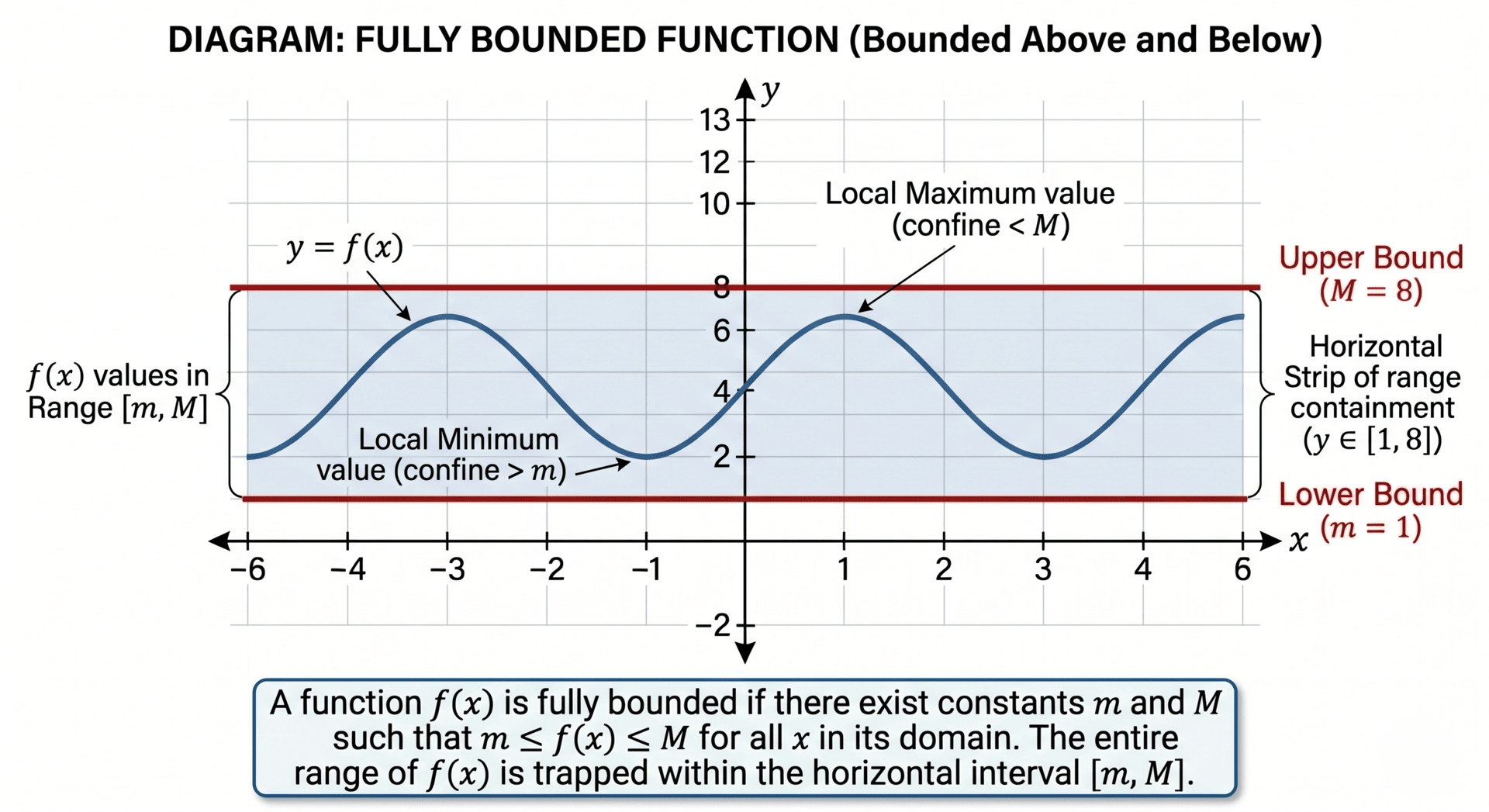
A function is classified as a fully bounded function if it is bounded both from above and from below. This means the entire range of the function is trapped within a specific horizontal interval.
Formal definition:
for all elements x in the domain.
On a graph, the complete curve stays confined inside a horizontal strip bounded by y = m and y = M. Trigonometric parent functions like sine and cosine are classic examples of fully bounded functions.
Worked Example
Problem: Find the maximum or minimum turning points to determine the bounds of the function:
for all real values of x, and state its boundedness status.
Step-by-step Solution:
Rearrange the quadratic expression to prepare for completing the square:
Factor out the negative sign from the variable terms:
Complete the square inside the bracket:
Expand the brackets and simplify the constants:
Analyse the completed square form to find the bounds. Since any real number squared must be greater than or equal to zero, the term:
This means that:
The maximum possible output occurs when the squared term equals zero, which yields f(3) = 16. For any other value of x, the function output will be less than 16.
Conclusion: The function is bounded from above with an upper bound of 16. It is unbounded from below because as x approaches infinity, the output approaches negative infinity.
Practice Questions & Solutions
Find the lower bound of the following function for all real values of x:

First, complete the square for the given quadratic function:

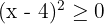
Since any real squared number cannot be negative:
Adding 3 to both sides of the inequality demonstrates that:

Therefore, the function is bounded below with a sharp lower bound of:

Determine the exact upper and lower bounds for the following function over all real inputs:

Start with the standard boundary interval for a cosine function:

Multiply each part of the inequality chain by negative 4 and reverse the inequality signs:

Rearrange the inequality back to standard numerical order:

Add 5 to all parts of the inequality to match the original function:

Hence, the function is fully bounded with a lower bound of 1 and an upper bound of 9.
Find the upper and lower bounds of the given function across the restricted domain:

For the domain:

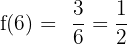
Because this reciprocal function is strictly decreasing for positive values of x, evaluate the outputs at the boundaries. Calculate the value at the upper domain limit:
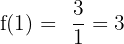
Calculate the value at the lower domain limit:
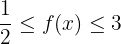
This establishes the bounded range of the function on this interval as:
The lower bound is:

The upper bound is:
Determine the bounds for the given exponential function over its specified domain:

For the domain:

As x grows infinitely large, the exponential term approaches zero from above:

This establishes a strict horizontal asymptote where the output values are greater than 2: f(x) > 2
Evaluate the function at the starting boundary where x equals 0:

This shows that the function values are contained within the following interval:
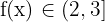
Therefore, the lower bound is 2 and the upper bound is 3.
Find the upper bound of the following function defined for all real numbers:

A squared real number must be greater than or equal to zero:

Multiplying by negative 3 reverses the inequality sign:

Add 12 to both sides of the inequality to reconstruct the function:

The function can never exceed this value, meaning the upper bound is:

Summarise with AI:
Did you like this article? Rate it!


 Loading...
I get it somehow, there are others who are unfamiliar and I have a hard time with it but it’s okay that I get it.
Thanks for sharing your thoughts! It’s completely normal to find some parts unfamiliar or more difficult than others. The important thing is that you’re making progress and understanding more as you practise. Keep going! 😊
At least I understood some of it, but there are others that I’m confused about and have a hard time understanding, but I get it.
Thanks for sharing! It’s great that you’ve understood some of it already. Don’t worry if a few parts are still confusing — keep practising and take your time with the trickier sections. You’ll get there! 😊
The lesson was a little difficult for me, especially the word problems, but the examples helped me understand it better.
Thanks for your feedback! Word problems can definitely be tricky, so we’re glad the examples helped make the lesson clearer. Keep practising — it gets easier with time! 😊
Thankyouuu po