In mathematics, a sequence is an ordered list of numbers governed by a specific rule or mapping:
A monotone sequence (or monotonic sequence) is a sequence whose terms move in a single, consistent direction—either entirely non-increasing or entirely non-decreasing—throughout its entire domain. In simple terms, a monotonic sequence never alternates, fluctuates, or reverses direction.


Classifications of Monotonicity
Monotonicity is formally categorised based on whether consecutive terms can be equal or must strictly change in value.
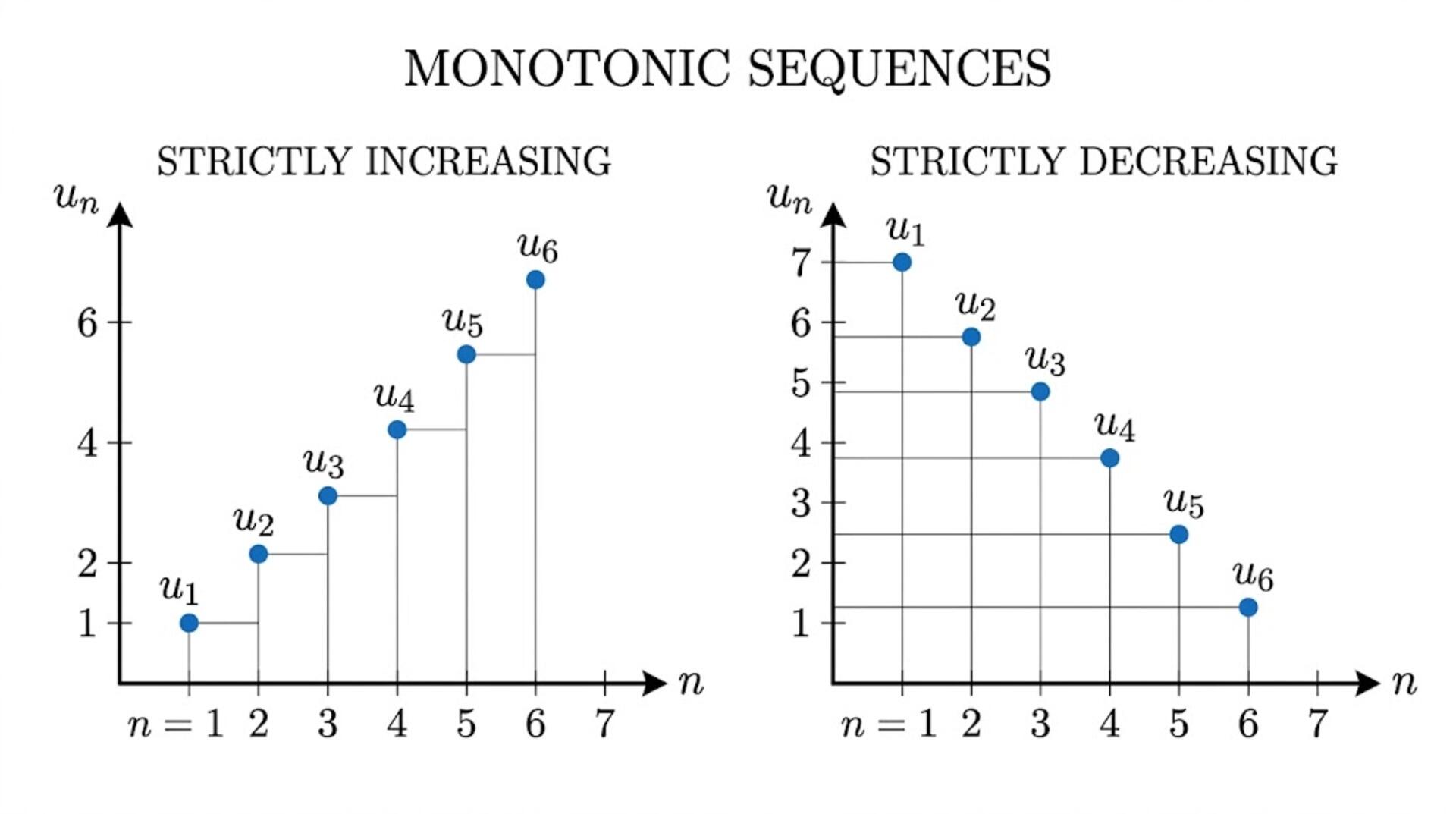
A. Increasing Sequences
- Strictly Increasing: Each term is strictly greater than the preceding term:
Example: where
- Weakly Increasing (Non-Decreasing): Each term is greater than or equal to the preceding term:
Example:
B. Decreasing Sequences
- Strictly Decreasing: Each term is strictly less than the preceding term:
Example: where
- Weakly Decreasing (Non-Increasing): Each term is less than or equal to the preceding term:
Example:
The Constant Sequence Case:
A constant sequence such as satisfies both and . Mathematically, it is both weakly increasing and weakly decreasing, and is therefore classified as monotonic.
C. Non-Monotonic Sequences
If a sequence changes direction, it is non-monotonic:
- Alternating Sequences: The terms switch signs or fluctuate around a value, such as , giving
- Periodic Sequences: The terms repeat in a cycle of length , such that .
Algebraic Tests to Prove Monotonicity
In exam questions, simply listing the first few terms is not sufficient proof of monotonicity. You must prove the condition holds for all general terms using one of three standard algebraic methods.
Method 1: The Difference Test
Subtract the n-th term from the (n+1)-th term and analyse the sign:
- If for all , the sequence is strictly increasing.
- If for all , the sequence is weakly increasing.
- If for all , the sequence is strictly decreasing.
- If for all , the sequence is weakly decreasing.
Method 2: The Ratio Test
Applicable only when all terms are strictly positive ( for all n):
- If for all , the sequence is strictly increasing.
- If for all , the sequence is strictly decreasing.
- If for all , the sequence is constant.
Method 3: The Derivative Test
If the sequence can be defined by a continuous real function f(x) such that for :
- Find the first derivative .
- If for all , then f(x) is strictly increasing, which proves is strictly increasing.
- If for all then f(x) is strictly decreasing, which proves is strictly decreasing.
The Monotone Convergence Theorem:
- If a sequence is monotonically increasing and bounded above, it is guaranteed to converge to a finite limit L, where .
- If a sequence is monotonically decreasing and bounded below, it is guaranteed to converge to a finite limit L, where .
- An unbounded increasing sequence diverges to ; an unbounded decreasing sequence diverges to .
Monotonicity in Standard Sequences
Arithmetic Sequences
The difference between consecutive terms is constant:
- If common difference d > 0: Strictly increasing (unbounded above, diverges to ).
- If common difference d < 0: Strictly decreasing (unbounded below, diverges to ).
- If common difference d = 0: Constant (converges to a).
Geometric Sequences
The behaviour depends on the common ratio r:
- If r > 1 and a > 0: Strictly increasing (diverges to ).
- If 0 < r < 1 and a > 0: Strictly decreasing (bounded below by 0, converges to 0).
- If r = 1: Constant sequence ().
- If r < 0: Non-monotonic because consecutive terms alternate signs.
Practice Questions & Solutions
Determine whether each of the following sequences is strictly increasing, strictly decreasing, or non-monotonic for 
(a)

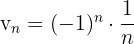
(b)
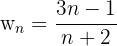
(c)
(a)
:

Since -4 <0,

is less than 0 so the sequence is strictly decreasing.
(b)
:


Here,
v_1 is less than v_2, but v_2 is greater than v_3.
The sequence is non-monotonic (alternating).
(c)
:

Combine over a common denominator:



Subtract:

Since  , the numerator and denominator are positive, so
 .
The sequence is strictly increasing.
A sequence is given by

for
.
(a) Compute the first four terms  .
(b) Find an expression for .
(c) Determine the integer value  such that the sequence is strictly increasing for all
 .
(a) Evaluate the first four terms:




(b) Compute :


(c) For the sequence to be strictly increasing:

Since  must be an integer,
 .
For  ,
 .
Therefore, the sequence is strictly increasing for all (so  ).
Given the sequence
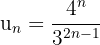
for
(a) Simplify the expression for  .
(b) Use the ratio test  to prove that is strictly decreasing.
(c) State the limit of as  .
(a) Simplify :
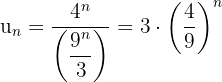
(b) Apply the ratio test: 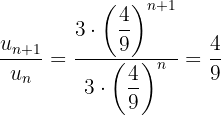
Since  and
 for all
 :
 implies

Therefore, is strictly decreasing.
(c) Since is a geometric sequence with common ratio  :

Summarise with AI:
Did you like this article? Rate it!


 Loading...
I get it somehow, there are others who are unfamiliar and I have a hard time with it but it’s okay that I get it.
Thanks for sharing your thoughts! It’s completely normal to find some parts unfamiliar or more difficult than others. The important thing is that you’re making progress and understanding more as you practise. Keep going! 😊
At least I understood some of it, but there are others that I’m confused about and have a hard time understanding, but I get it.
Thanks for sharing! It’s great that you’ve understood some of it already. Don’t worry if a few parts are still confusing — keep practising and take your time with the trickier sections. You’ll get there! 😊
The lesson was a little difficult for me, especially the word problems, but the examples helped me understand it better.
Thanks for your feedback! Word problems can definitely be tricky, so we’re glad the examples helped make the lesson clearer. Keep practising — it gets easier with time! 😊
Thankyouuu po