An inverse function is a mathematical operation that reverses the effect of an original function. If a function f takes an input x and maps it to an output y, its inverse—denoted as —takes that output y and maps it directly back to the original input x.
In mathematical terms:
Consequently, applying a function followed immediately by its inverse returns the starting value:


Why Inverse Functions Matter
- Real-World Applications: Inversion principles underpin modern data encryption (ciphers and decoders), navigational systems, and thermodynamic conversions (such as translating Celsius to Fahrenheit and back).
- Academic Relevance: Inverse operations form the backbone of calculus (such as reversing differentiation via integration, or linking exponential growth to logarithmic decay).
- Exam Importance: Questions on inverse functions are guaranteed mark-earners across UK examination boards (Edexcel, AQA, OCR). At GCSE Higher Tier, they test algebraic manipulation and function notation (typically 3–4 marks). At A-Level Mathematics, they integrate domain-range restrictions, composite functions, and geometric reflections across the line y = x (frequently worth 5–8 marks).
The Function Machine Analogy
Think of a function as a directional conveyor belt:
The inverse function simply runs the conveyor belt in reverse:
Golden Rule of Notation:
The superscript in denotes an inverse function, NOT a reciprocal power.
If an examiner wants the reciprocal, it will be written explicitly as or .
Invertibility: One-to-One vs. Many-to-One Functions
For an inverse relation to be a true mathematical function, every output must trace back to exactly one unique input.
- One-to-One Function: Each input x produces a distinct output y. Every one-to-one function possesses an inverse.
- Many-to-One Function: Multiple inputs produce the same output (e.g., for , both x = 3 and x = -3 yield y = 9). A many-to-one function does not have an inverse across its entire natural domain, because reversing it produces multiple outputs for a single input, violating the definition of a function.
To invert a many-to-one function (such as a quadratic), examiners restrict the domain so that the curve is strictly increasing or strictly decreasing (e.g., defining only for ).
Domain and Range Interchange
Because an inverse function swaps inputs and outputs, the domain and range swap places:
- Domain: The set of valid input values (x).
- Range: The set of resulting output values (y or f(x)).
When an exam question asks for the domain of , first calculate the range of , then replace the variable label with x.
Graphical Properties: Reflection in the Line y = x
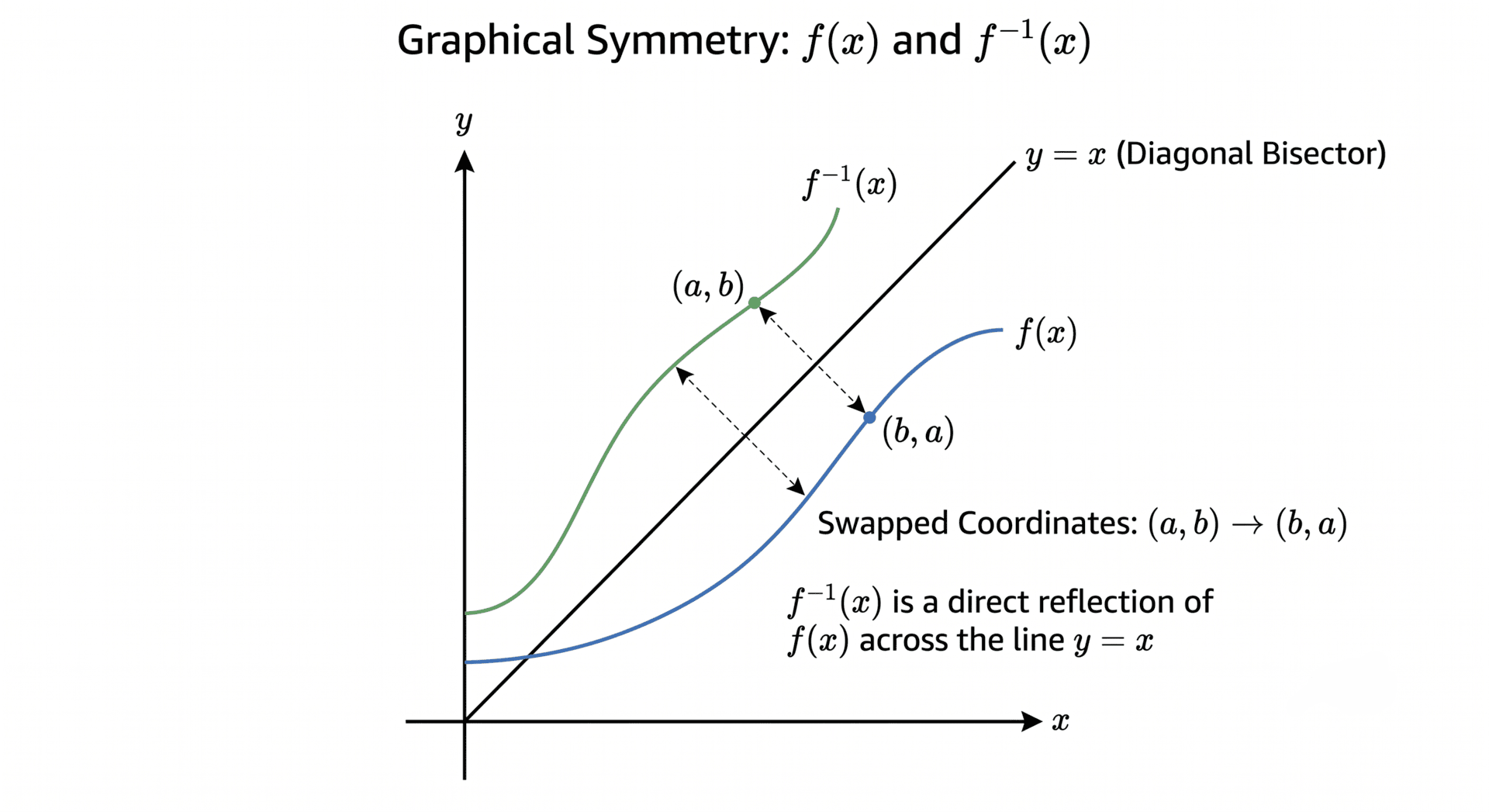
The graph of is the geometric reflection of y = f(x) in the line y = x.
- Every coordinate point (a, b) on y = f(x) maps to the point (b, a) on .
- The y-intercept of f(x) becomes the x-intercept of , and vice versa.
- Horizontal asymptotes on f(x) become vertical asymptotes on .
Step 1 (Rename): Set y = f(x).
Step 2 (Rearrange): Manipulate the equation algebraically to isolate and make x the subject.
Step 3 (Swap): Swap variables: replace x with y (or directly write in terms of x).
Step 4 (Annotate): Replace y with , and state any domain restrictions.
Practice Questions & Solutions
The function f is defined by f(x) = 7 - 3x for 
(a) Find an expression for

(b) Verify algebraically that

(a) Set


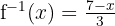
(b) Substitute
into f(x):


The function h is defined by

for

Find

and state its domain.
Complete the square on h(x):

Set


Taking the square root:

Because the domain is restricted to , 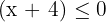 . Hence, select the negative square root:

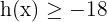
The vertex is at (-4, -18), so the minimum value of h(x) is -18, giving range

The function k is defined by
 for
for
Find

and state its exact domain.
Set


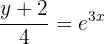
Take the natural logarithm (ln) of both sides:
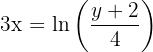
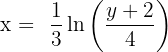
Swap variables:
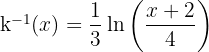
Since  for all real x:

Domain: x > -2
Summarise with AI:
Did you like this article? Rate it!

 Loading...
I get it somehow, there are others who are unfamiliar and I have a hard time with it but it’s okay that I get it.
Thanks for sharing your thoughts! It’s completely normal to find some parts unfamiliar or more difficult than others. The important thing is that you’re making progress and understanding more as you practise. Keep going! 😊
At least I understood some of it, but there are others that I’m confused about and have a hard time understanding, but I get it.
Thanks for sharing! It’s great that you’ve understood some of it already. Don’t worry if a few parts are still confusing — keep practising and take your time with the trickier sections. You’ll get there! 😊
The lesson was a little difficult for me, especially the word problems, but the examples helped me understand it better.
Thanks for your feedback! Word problems can definitely be tricky, so we’re glad the examples helped make the lesson clearer. Keep practising — it gets easier with time! 😊
Thankyouuu po