The domain of a function is the complete set of all possible independent input values (typically x) for which the function is mathematically defined and outputs a real number ().
If you consider a function as an algebraic processing machine:
If an input value produces an impossible mathematical operation—such as division by zero, taking the even root of a negative number, or evaluating the logarithm of a non-positive number—that value cannot belong to the domain and must be excluded.


Mathematical Domain Notation
UK exam boards accept three standard conventions for expressing domains:
- Inequality Notation: Direct algebraic inequalities.
- Example:, or .
- Set-Builder Notation: Formal set notation stating membership in the real numbers .
- Example: ("the set of all real numbers x such that x does not equal 4").
- Example:.
- Interval Notation: Bracket notation representing continuous spans on the real number line.
- Round parentheses (a, b) indicate non-inclusive boundaries (< or >).
- Square brackets [a, b] indicate inclusive boundaries ( or ).
- Example: represents .
- Example: represents .
The Three Fundamental Domain Restrictions
Unless a function involves one of three specific algebraic operations, its natural domain is simply all real numbers ().
Whenever you analyse a function, check for these three critical conditions:
Restriction 1: Division by Zero (Rational Functions)
Division by zero is undefined in mathematics. For any rational function:
The domain requires that the denominator cannot equal zero:
Values of x that make Q(x) = 0 represent vertical asymptotes or points of discontinuity (holes) and must be excluded from the domain.
Restriction 2: Even Roots of Negative Numbers (Radical Functions)
In real analysis, you cannot take an even root (square root , fourth root , etc.) of a negative number:
Odd Roots vs. Even Roots:
Odd roots (such as cube roots or fifth roots ) can accept negative inputs because .
Therefore, for , the radical itself imposes no domain restriction (, provided is defined).
If an even root appears in a denominator, it cannot equal zero either, turning the weak inequality into a strict inequality:
Restriction 3: Logarithms of Non-Positive Numbers
The logarithm of zero or a negative number is undefined over the set of real numbers. For any base :
The argument of the logarithm must be strictly positive.
Worked Example
Polynomial Functions
Find the domain of each of the following polynomial functions:
(a)
(b)
Step 1: Check for algebraic restrictions
- Are there any denominators containing variables? No.
- Are there any even roots? No.
- Are there any logarithms or inverse trigonometric expressions? No.
Step 2: Formulate the domain statement
Both functions are polynomials defined for every real number.
Practice Questions & Solutions
Find the domain of the function:
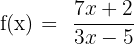
Express your answer in set-builder notation.
Set the denominator equal to zero to find the excluded input value:

The numerator is a polynomial defined for all real numbers.
The only restriction is that
 .
.
In set-builder notation:
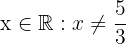
Determine the domain of the function:
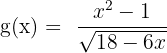
Express your answer using inequality notation.
The expression inside the square root is in the denominator. Therefore, the radicand must be strictly greater than zero:
18 - 6x > 0
Rearrange the inequality:
18 > 6x
Divide by 6:

The numerator  is defined for all real numbers.
Therefore, the domain is:
x <3
Find the domain of the function:
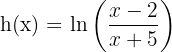
For the natural logarithm to be defined, its argument must be strictly positive:

A quotient  is strictly positive when either:
Both numerator and denominator are positive:
 and
and 
Intersection: 
Both numerator and denominator are negative:
 and
and 
Intersection: 
(Alternatively, note that the critical values are  and
and  . Testing values in the intervals
  ,
,  , and
, and  reveals the quotient is positive when or ).
Domain:

The function k(x) is defined by:

Find the set of values of x for which k(x) is defined, expressing your answer in interval notation.
The function k(x) is the sum of two square root terms. Both must be defined simultaneously:
First radical condition:

Second radical condition:

Find the intersection of both intervals:

In interval notation:

Find all values of  in the interval
  that must be excluded from the domain of:
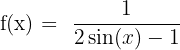
The function is undefined wherever the denominator is zero:


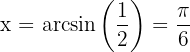
Within the specified interval
:
First quadrant solution:
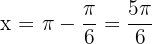
Second quadrant solution:
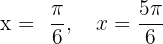
Excluded values:
Summarise with AI:
Did you like this article? Rate it!


 Loading...
I get it somehow, there are others who are unfamiliar and I have a hard time with it but it’s okay that I get it.
Thanks for sharing your thoughts! It’s completely normal to find some parts unfamiliar or more difficult than others. The important thing is that you’re making progress and understanding more as you practise. Keep going! 😊
At least I understood some of it, but there are others that I’m confused about and have a hard time understanding, but I get it.
Thanks for sharing! It’s great that you’ve understood some of it already. Don’t worry if a few parts are still confusing — keep practising and take your time with the trickier sections. You’ll get there! 😊
The lesson was a little difficult for me, especially the word problems, but the examples helped me understand it better.
Thanks for your feedback! Word problems can definitely be tricky, so we’re glad the examples helped make the lesson clearer. Keep practising — it gets easier with time! 😊
Thankyouuu po