


What are Polynomial Functions?
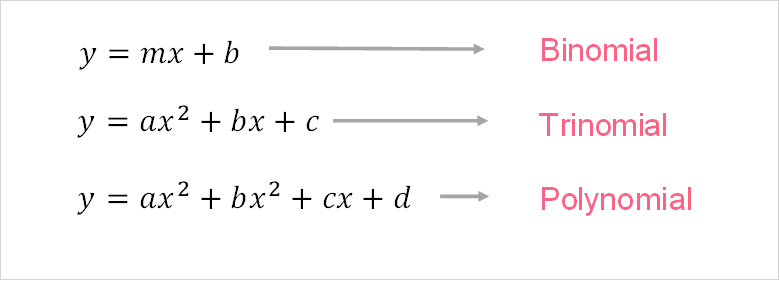
| Linear function |  | Two monomials |
| Quadratic function |  | Three monomials |
| Cubic function |  | Four monomials |
 |  |  |  |
| One variable | One constant | One variable times one constant | One constant times two or more variables |
Rational Functions
Rational functions are defined as two polynomial functions divided by each other. In other words, we have one polynomial function in the numerator and one polynomial function in the denominator. 

| Numerator |  | Binomial |
| Denominator | 1 | Monomial |


| x | y |
| 1 | 7 |
| 2 | 5 |
| ... | |
| 10 | 3.4 |
Common Polynomials
Now that we have gone through all the building blocks of rational functions, we can begin to discuss how to graph rational functions. Since the goal of simplifying rational functions is to reduce them to a polynomial, we will start with graphing the most common polynomials.
Linear Polynomial
As mentioned, the linear polynomial is the easiest polynomial to graph. We only have four elements in a linear polynomial.
| y | Output | Dependent variable |
| m | Slope | The rate of change |
| x | Input | Independent variable |
| b | y-intercept | Value of function if x = 0 |
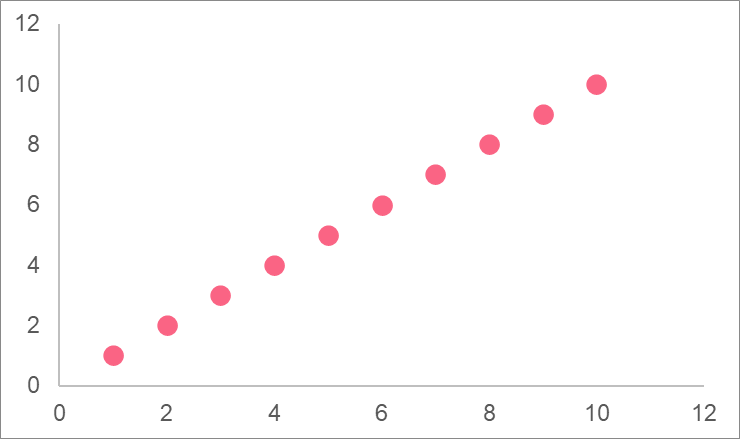
To graph a linear polynomial, simply plug in values of x in order to get the resulting y value. No matter what equation or x values you choose, a linear polynomial will always result in a straight line. 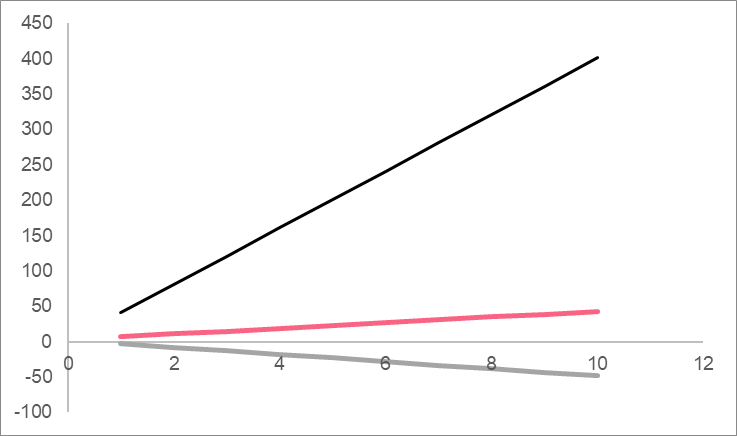
| A | B | C |
| y = 4x + 3 | y = -5x + 2 | y = 40x+1 |
Quadratic
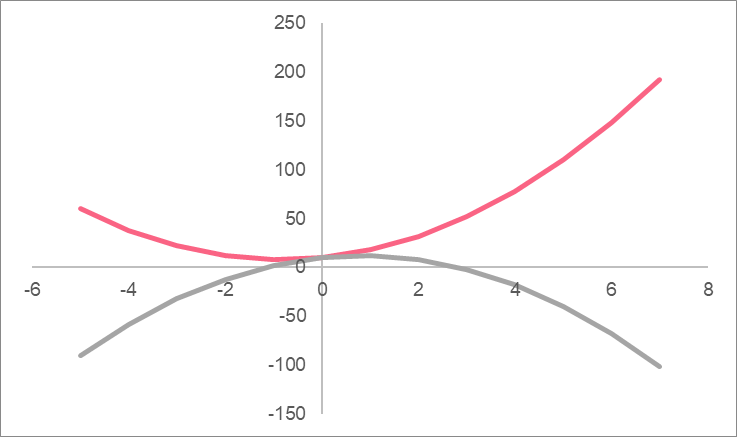
A quadratic equation has a degree of two. Degrees in polynomial functions mean the highest value of power in the equation.
| Degree 2 | |
| Degree 3 | |
| Degree 4 |  |
| Negative sign in front of a |  | Parabola shape is |
| Positive sign in front ofa | | Parabola shape is |
Cubic
A cubic function has a degree of 3. Just like the other polynomials we’ve talked about, graphing a cubic function involves picking values for x and graphing the resulting coordinates. A cubic function will always result in an ‘S’ shape. Just like with a quadratic function, depending on the sign in front of the ‘a’ term, this ‘S’ shape can either be normal or backwards. Take a look at the examples below. 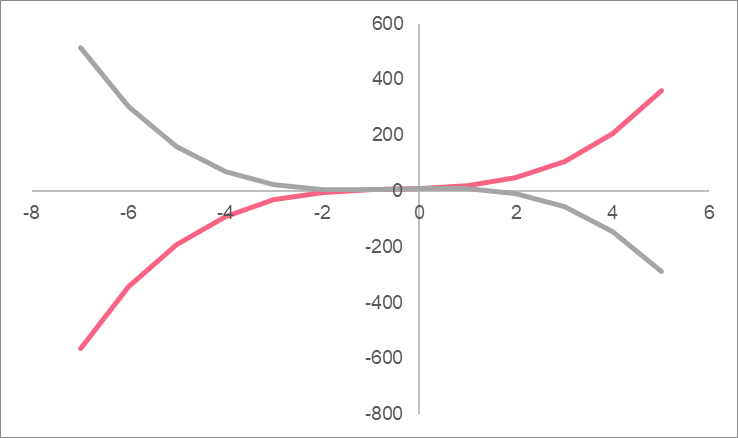
| A | B |
| |
Graphing Simple Rational Functions
Now that we have a good grasp on all the components that go into graphing rational functions, let’s start by graphing simple rational functions. 
| A | Binomial | Linear function |
| B | Monomial | Linear function |
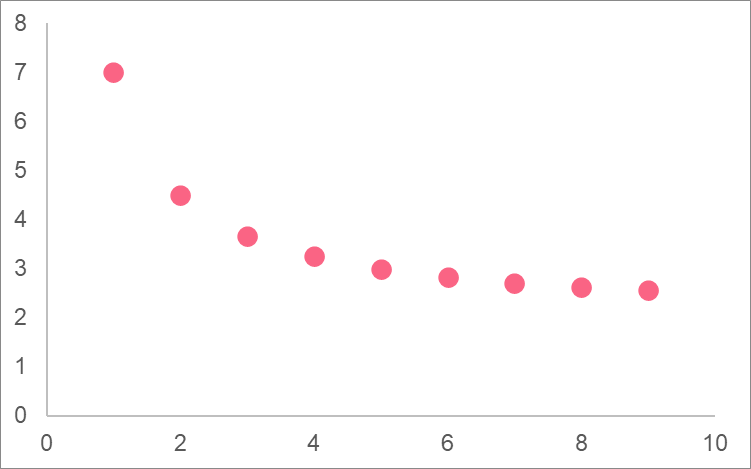
There are two ways we can do this, simply plug in values for x and plot the coordinates:
| x | y |
| 1.0 | 7.0 |
| 2.0 | 4.5 |
| 3.0 | 3.7 |
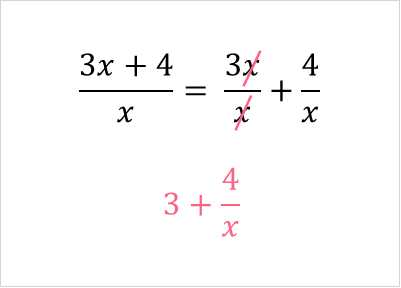
Or simplify the equation first: 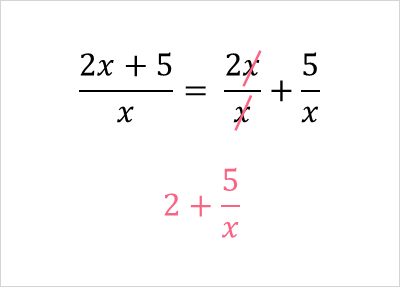
Graphing Complex Rational Functions
When you’re graphing more complex rational functions, you can follow either of the two processes we mentioned above. Let’s take an example: 
| A | Trinomial | Quadratic function |
| B | Binomial | Linear |
| C | Binomial | Linear |
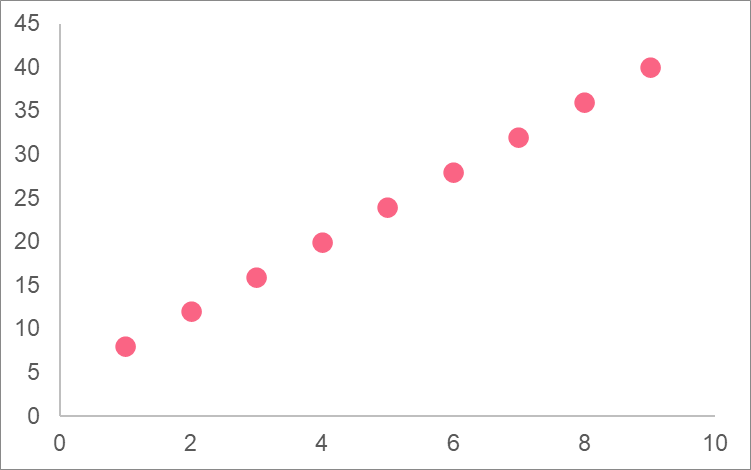
We can plug in values of x:
| x | y |
| 1 | 8 |
| 2 | 12 |
| ... | ... |
However, this can take too long with more complex rational functions. So instead, we prefer to simplify first. 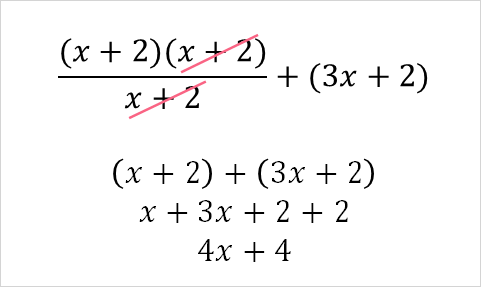
Step-by-step Example
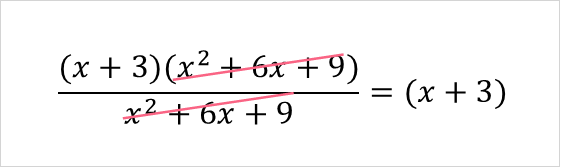
Let’s graph the following rational function: 




Summarise with AI:
Did you like this article? Rate it!


 Loading...
I get it somehow, there are others who are unfamiliar and I have a hard time with it but it’s okay that I get it.
Thanks for sharing your thoughts! It’s completely normal to find some parts unfamiliar or more difficult than others. The important thing is that you’re making progress and understanding more as you practise. Keep going! 😊
At least I understood some of it, but there are others that I’m confused about and have a hard time understanding, but I get it.
Thanks for sharing! It’s great that you’ve understood some of it already. Don’t worry if a few parts are still confusing — keep practising and take your time with the trickier sections. You’ll get there! 😊
The lesson was a little difficult for me, especially the word problems, but the examples helped me understand it better.
Thanks for your feedback! Word problems can definitely be tricky, so we’re glad the examples helped make the lesson clearer. Keep practising — it gets easier with time! 😊
Thankyouuu po