A sequence is simply an ordered list of numbers generated by a specific mathematical rule. Each individual number within the list is called a term. Unlike a random set of numbers, the terms in a sequence follow a distinct numerical pattern that allows us to predict successive terms infinitely.
In mathematical notation, we represent individual terms using a subscript index variable, or , where represents the term position (n = 1 for the 1st term, n = 2 for the 2nd term, and so on). The algebraic rule that generates the entire list is known as the n-th term formula.


GCSE vs. A-Level Core Objectives
To navigate your exam syllabus effectively, you must understand how sequence theory progresses between GCSE and A-Level expectations.
1. The GCSE Tier Foundations
At the GCSE level, your focus is entirely on identifying, continuing, and finding the algebraic rules for two primary types of sequences:
- Arithmetic Sequences (Linear): A sequence where each successive term is found by adding or subtracting a fixed constant value. This fixed constant is called the common difference (d). The terms grow linearly.
- Geometric Sequences (Exponential): A sequence where each successive term is found by multiplying the previous term by a fixed constant value. This multiplier is called the common ratio (r). The terms grow or decay exponentially.
2. The A-Level Tier Extensions
At the A-Level, the curriculum expands to analyze the long-term limiting behaviour and structural classifications of infinite numerical progressions.
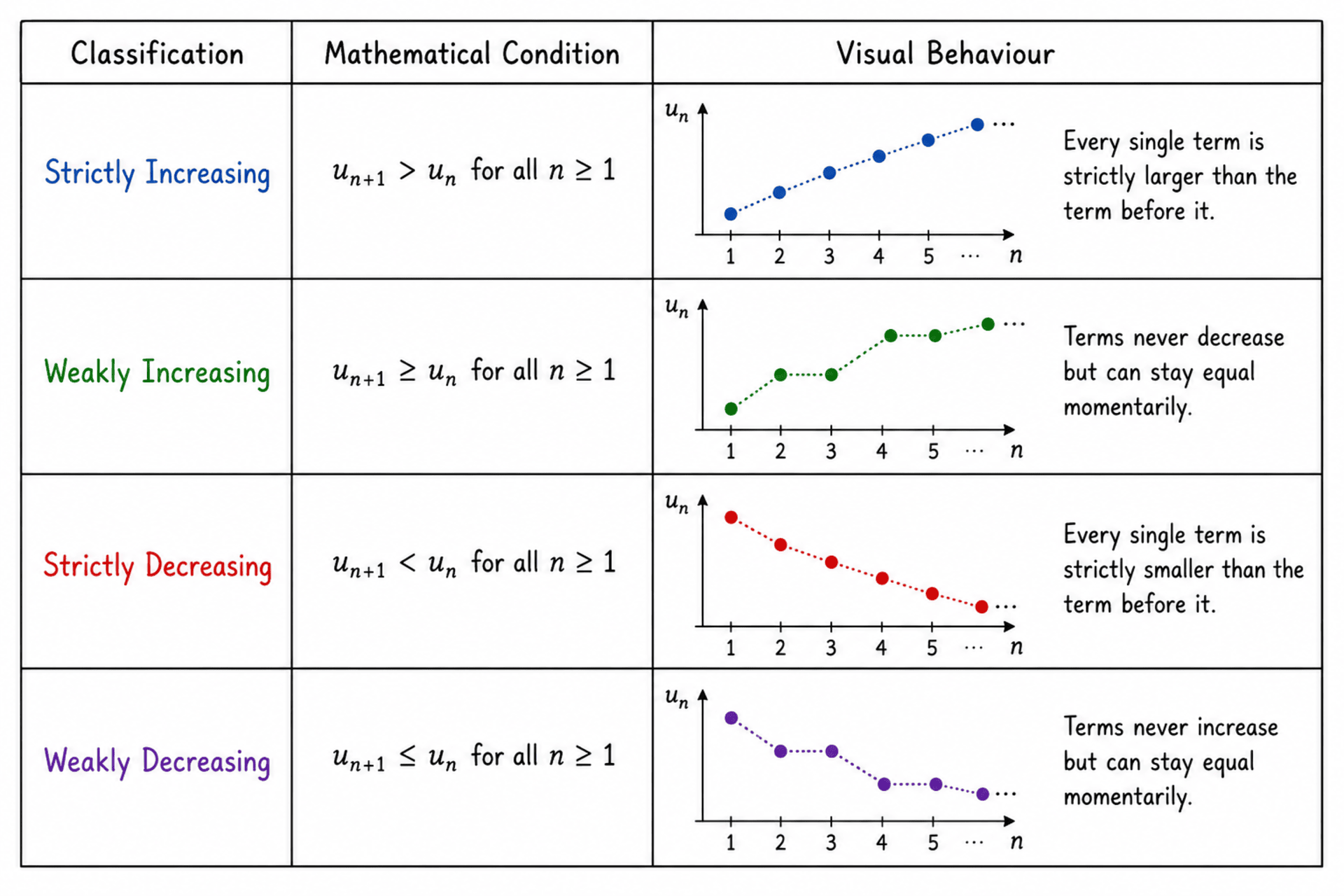
Monotonicity
A sequence is classified as monotonic if it moves in only one direction throughout its entire infinite domain. We break this down into four precise mathematical definitions:
Sequence vs. Series
It is an essential requirement to avoid confusing a sequence with a series:
- A sequence is the raw, ordered list of discrete numbers separated by commas: 2, 4, 6, 8, ...
- A series is the operational accumulation or summation of the terms within that sequence: 2 + 4 + 6 + 8 + ... (denoted using Sigma notation, ).
Finite vs. Infinite Boundedness
A finite sequence has a definitive, closed terminal path ending at a specific n-th term position. An infinite sequence continues without end, stretching its term distribution towards infinity ().
Progressive Practice Worksheet
This progressive worksheet transitions from core GCSE foundation techniques to complex A-Level structural proofs.
An arithmetic sequence is given by the numerical progression:

Find the algebraic expression for the n-th term of this sequence, and use it to deduce the value of the 50th term.
Find the common difference (d) - Subtract any term from the successive term:
 . So,
. So, 
Set up the n-th term: An arithmetic formula takes the shape:

where a is the first term (a = 5)

Calculate the 50th term - Substitute n = 50 into your formula:

A geometric sequence has a first term  and a common ratio r = 2. Write down the first four terms of this sequence, and state the exact expression for the n-th term.
Generate terms: Multiply by the common ratio r=2 sequentially starting at 3:



The first four terms are:

Formula Formulation: The standard geometric tracking template is:


Identify whether each of the following sequences is arithmetic, geometric, or neither:



a) Each term is multiplied by 3:

This is a geometric sequence (r = 3).
b) Each term increases by adding a constant value of 2:
 .
.
This is an arithmetic sequence (d = 2x).
c) The terms are perfect squares:
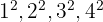 .
.
The difference between terms is not constant, nor is the ratio. This is neither (it is a square sequence).
An arithmetic sequence has the n-th term formula  . Determine the first term of the sequence that exceeds a value of 200.
Set up the inequality: We need to find the smallest integer value of n where:


Solve for n:

Identify the term: Since n must be a strict integer greater than 29, the first term to exceed 200 is the 30th term (n = 30).
Check:
 .
.
Find the n-th term formula for the following quadratic sequence:

Find the differences - First row of differences:
 ,
,  ,
,  ,
, 
Second row of differences (constant change):
 ,
,  ,
, 
Determine the  coefficient - Halve the constant second difference:
 .
.
This means the sequence starts with  .
.
Subtract from the original terms to find the linear remainder:
Original:

Minus :
 ,
,  ,
,  ,
, 
The remaining tracking sequence is:
 , which is an arithmetic sequence with an n-th term of
  .
.
Combine components: The final quadratic expression is:
 .
.
A sequence is defined by the formula:
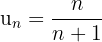
for

Prove algebraically that this sequence is strictly increasing.
State the condition for a strictly increasing sequence: You must prove that:

for all valid positions where:
Set up the terms algebraically:

Subtract the rational fractions:

Find a common denominator: 
Analyse the final expression, since n represents a positive integer position index (), both factors in the denominator are strictly positive. Therefore, the fraction:
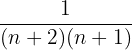
is strictly greater than 0 for all [n.
Because
the sequence is strictly increasing.
An infinite sequence is generated by the expression:

Determine whether the sequence is monotonic increasing, monotonic decreasing, or non-monotonic.
Evaluate how the variable index shifts the value as n] grows. The exponential component is:

As n increases, the denominator  grows larger, which means the fraction:

continuously shrinks.
Because a continuously shrinking value is being added to the constant base 4, each successive term will be strictly smaller than the term that preceded it ( u_{n+1}
The third term of a geometric sequence is 18 and the sixth term is 486. Find the exact value of the first term  and the common ratio
  .
.
Set up simultaneous equations using :
Term 3: 
Term 6: 
Divide the equations to eliminate variable :
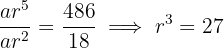
Solve for and :

Substitute  back into the Term 3 expression:

Final Answer: The first term is  and the common ratio is
  .
.
Explain the operational difference between the sequence defined by:
 and the series denoted by:
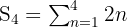
calculating the final structured output for both.
The Sequence Output: This represents a simple list of individual terms from position 1 to 4:
 ,
,  ,
,  ,
,  .
.
The sequence is simply the discrete list:
 .
.
The Series Output: This represents the summation of those exact terms:

Conclusion: The sequence outputs an ordered list of values, whereas the series aggregates those values into a single numerical sum total (20).
Analyse the long-term limiting behaviour of the infinite sequence:
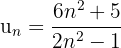
as
 .
.
State whether the sequence converges or diverges.
Evaluate the limiting behavior as :
Divide every term in the numerator and denominator by the highest power of  present in the expression, which is :
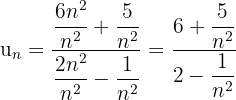
Apply the limit:
As , the terms:
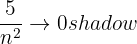
and
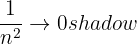 .
.

Conclusion: Because the sequence stabilizes on a single, fixed real number value as it heads to infinity, the infinite sequence converges to a limit of 3.
Summarise with AI:
Did you like this article? Rate it!


 Loading...
I get it somehow, there are others who are unfamiliar and I have a hard time with it but it’s okay that I get it.
Thanks for sharing your thoughts! It’s completely normal to find some parts unfamiliar or more difficult than others. The important thing is that you’re making progress and understanding more as you practise. Keep going! 😊
At least I understood some of it, but there are others that I’m confused about and have a hard time understanding, but I get it.
Thanks for sharing! It’s great that you’ve understood some of it already. Don’t worry if a few parts are still confusing — keep practising and take your time with the trickier sections. You’ll get there! 😊
The lesson was a little difficult for me, especially the word problems, but the examples helped me understand it better.
Thanks for your feedback! Word problems can definitely be tricky, so we’re glad the examples helped make the lesson clearer. Keep practising — it gets easier with time! 😊
Thankyouuu po