Chapters
In this article, we will discuss how infectious diseases like cholera, malaria, tuberculosis, and HIV are transmitted and how these diseases can be prevented. So, let us get started.










How is Cholera Transmitted?
- The bacterium Vibrio cholerae is responsible for causing cholera
- This infectious disease is waterborne and foodborne
- It implies that the people get this disease when they cannot have an access to proper sanitation and uncontaminated food
- A person can get cholera when he washes or bathes with contaminated water. He/she can also get infected after eating contaminated food, or by exposure to contaminated water
- The people who are infected with this disease egest a huge number of bacteria in their feces
- If the water supply is contaminated with these feces or if the people who have this disease handle the food or utensils without washing their hands, then the uninfected people can also get this disease.
How is Malaria Transmitted?
One of the four species of the protoctist Plasmodium is responsible for causing malaria. An insect vector transmits these protoctists to humans. For instance, female Anopheles mosquitoes feed on human blood to get the required protein to develop their eggs. If they bite a person who is infected with Plasmodium, then the mosquito will take up some of the pathogens with the blood meal. When they feed on the blood of the next human, they transmit the Plasmodium to the new human’s blood.
Blood transfusion and re-using unsterile needles can also spread malaria to uninfected people. Plasmodium can also transmit from mother to child across the placenta.
How is Tuberculosis Transmitted?
The Mycobacterium tuberculosis bacteria enter the air in small droplets of liquid when infected people with active disease form sneeze or cough. TB is passed on when uninfected people inhale these droplets which carry the Mycobacterium tuberculosis bacterium. Hence, this disease spreads more quickly in overcrowded situations. The TB caused by Mycobacterium Bovis occurs in cattle but is transmitted to humans when they consume contaminated meat or unpasteurized milk.
How is HIV/AIDS Transmitted?
HIV (Human Immunodeficiency Virus) is a retrovirus that is not transmitted through vector-like malaria. This virus cannot survive outside of the human body and spreads by intimate human contact and can be transmitted only by direct exchange of body fluids. It implies that the HIV is transmitted in the following ways:
- Blood donation
- Sexual Intercourse
- Needle sharing used by intravenous drug addicts
- From mother to child across the placenta or through the mixing of blood between mother and child during birth
- From mother to child through a breastfeed
In the next section of the article, we will discuss how these diseases can be prevented and controlled.
Prevention and Control of Infectious Diseases
How can cholera be prevented and controlled?
Cholera spreads when people do not have access to proper sanitation facilities or uncontaminated water. It is hard to prevent and control cholera because of the following reasons:
- Lack of proper infrastructure in fast-growing cities in developing countries
- Non-availability of adequate funds for large-scale projects like sewage treatment facilities, clean water supplies, and provision of drainage systems.
- Destruction of sanitation infrastructure due to a humanitarian crisis or poor sanitation facilities in overcrowded temporary housing
- Irrigation of crops using the raw human sewage
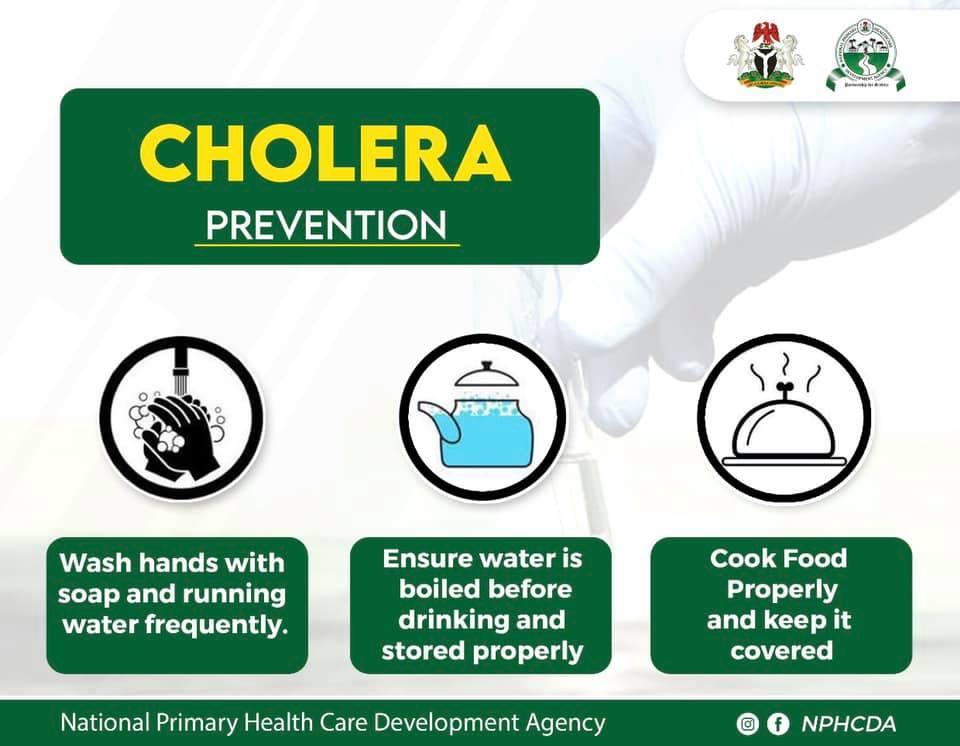
Cholera can be prevented by:
- Providing appropriate sewage treatment infrastructure
- Providing clean, piped, chlorinated water
- Starting vaccination programmed in regions where cholera is endemic
Cholera can be controlled by:
- Giving ready access to treatments like oral rehydration therapy (it is a solution that contains salts, water, and glucose
- Starting monitoring programs by WHO (World Health Organization)
- Using antibiotics in extreme cases to mitigate the risk of antibiotic resistance
How can malaria be prevented and controlled?
Malaria can be reduced through the following three main methods:
- Minimizing the number of Anopheles mosquitoes in an area
- Minimizing the risk of being bitten by these mosquitoes
- Stopping Plasmodium from infecting humans by using drugs
Since malaria is transmitted by vectors Anopheles mosquitoes, hence the transmission cycle can be interrupted by minimizing these mosquitoes. These mosquitoes can be reduced by”
- Using insecticides like DDT to spray living areas
- Spreading oil to the surfaces of ponds and drainage or irrigation ditches (a layer of oil kills the larvae as they breathe air at the surface of the water)
- Draining marshes and other unessential water bodies
- Ensuring to stock the water bodies with fish that feed on mosquito larvae
- Spraying a preparation that contains the bacterium Bacillus thuringiensis in the water bodies as it kills the mosquito larvae but is not dangerous to other organisms
Mosquitoes also lay their eggs in small pools or puddles of water. Hence, it is not possible to control all the breeding sites using the methods mentioned above.
The drugs such as chloroquine and mefloquine are taken before, during, and after visiting a site where malaria is prevalent. The best way to prevent malaria is to avoid being bitten by the mosquito. People can use bed nets to sleep in areas where malaria is prevalent.
WHO, government and institutions are emphasizing on following steps to control malaria:
- Enhancing diagnosis by working within health systems
- Supplying effective drugs efficiently
- Using a combination of drugs to minimize drug resistance
- Encouraging the use of proper methods like insecticide-treated bed nets and biological controls to target the larvae
Current scientific developments regarding malarial control are:
- Using simple dipstick tests to diagnose malaria. It makes the diagnosis much easier and quicker without the need for a laboratory.
- The whole Plasmodium genome has been re-sequenced which will assist in developing vaccines.
How can Tuberculosis be prevented and controlled?
Tuberculosis can be controlled by using a process of contact tracing. Contacts are screened for TB infection symptoms, however, the diagnosis can take up to two weeks.
Tuberculosis can be prevented by using the BCG vaccine. This vaccine protects about 70-80% of people receiving it. However, the effectiveness of this vaccine declines with age unless the person is exposed to TB.
The form of TB that is transmitted between cattle and humans can be prevented by following the steps below:
- Testing cattle for TB and destroying those with positive tests
- Pasteurizing milk and ensuring that the meat is properly cooked
How can HIV/AIDS be prevented and controlled?
It is difficult to prevent the spread of HIV because the virus has a long latent stage. Due to this, the people who have a virus, but show no symptoms can transmit this virus. It happens because the virus can alter its surface proteins. Therefore, it is hard for the human immune system to recognize it.
The following measures can be taken to prevent HIV:
- Screening the blood donations for HIV
- Treating the HIV positive mother and their children with drugs
- Using recommended tools during intercourse
- Initiating education programs on the transmission of viruses
- Discouraging intravenous drug addicts to share needles
HIV can be controlled through
- Screening blood donations
- Contact tracing
- Public health measures which include HIV testing of a population
- Using antiretroviral drugs
Did you like this article? Rate it!


 Loading...
Keep on teaching us,you are excellent teachers
This is great
Thanks a lot for this book,it really helped me a lot
It’s useful to me
Thanks a lot for your Better book!
It’s a perfect article, go ahead